In-House vs Outsourced Fabrication: What Brands Should Ask Before Awarding a Retail Fixture Order
Almost every fixture vendor describes itself as a manufacturer. Some own a factory where your order is cut, bent, finished and printed. Others take the order, draw it and send the work to several workshops. Both can deliver a good result. They are not the same thing, and the difference shows up in lead time, consistency and who answers when a panel arrives chipped.
This guide explains what in-house and outsourced fabrication each change, where outsourcing is perfectly reasonable, and the questions that reveal which one you are buying.
What the terms mean in practice
A fixture order has several steps: design and drawing, cutting, metal or wood fabrication, edge finishing, printing, assembly, packing, delivery and installation. In-house means the vendor does most of these in its own facility. Outsourced, or job work, means one or more are sent to third parties. A supply-chain explainer describes the pattern: a tier 2 supplier sells into tier 1, one step removed, often building to someone else’s print with limited design responsibility. Our guide to tier-1 and tier-2 fixture manufacturers applies that idea to this industry.
What changes when work is in-house
| Factor | In-house | Outsourced |
|---|---|---|
| Lead time | One schedule, quick correction of drawing changes | Waits for each workshop’s slot |
| Consistency | One process for finish, colour and dimension | Varies with each workshop |
| Accountability | One party answers | Blame can move between parties |
| Cost | Fixed investment recovered through volume | Pays margins at each handoff, but no machinery to carry |
| Flexibility | Limited by own machinery | Can reach any specialist process |
| Visibility | You can inspect the work in progress | Harder to see beyond the first vendor |
Where outsourcing is reasonable
- A specialist process the vendor does not own, such as glass toughening or powder coating.
- Peak capacity, when volumes exceed the factory’s output.
- Remote installation, where a regional crew is closer than the factory.
- Small, simple items where a local workshop is faster.
The issue is not outsourcing itself. It is outsourcing without telling you. Factory-audit guides call hidden subcontracting a risk: if it happens, audit the subcontractor too, or get a written guarantee of sub-supplier quality control.
Questions that reveal the truth
- Which steps for my order will be done in your facility, and which elsewhere?
- Can I visit while my kind of work is in production?
- Who prints, who cuts, who finishes and who installs?
- If you subcontract, who is the subcontractor and how is their work checked?
- What machinery do you own, and how busy is it?
- Who holds the drawings and files if I reorder next year?
A factory audit helps verify the answers, as covered in our factory audit checklist. Our guide to choosing a fixture manufacturer has further checks.
What full in-house capability looks like
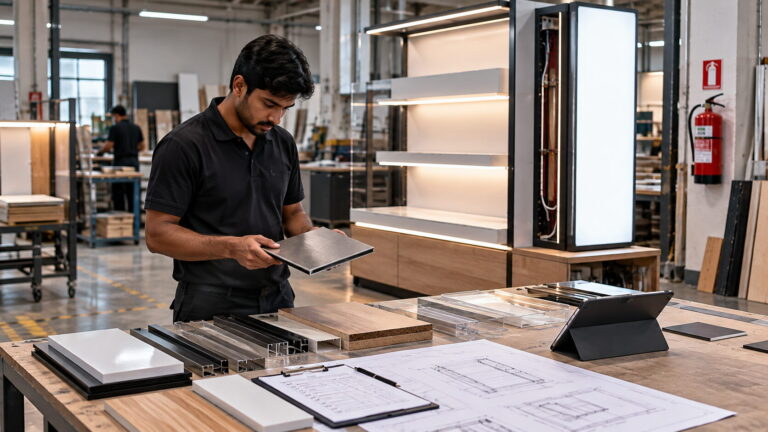
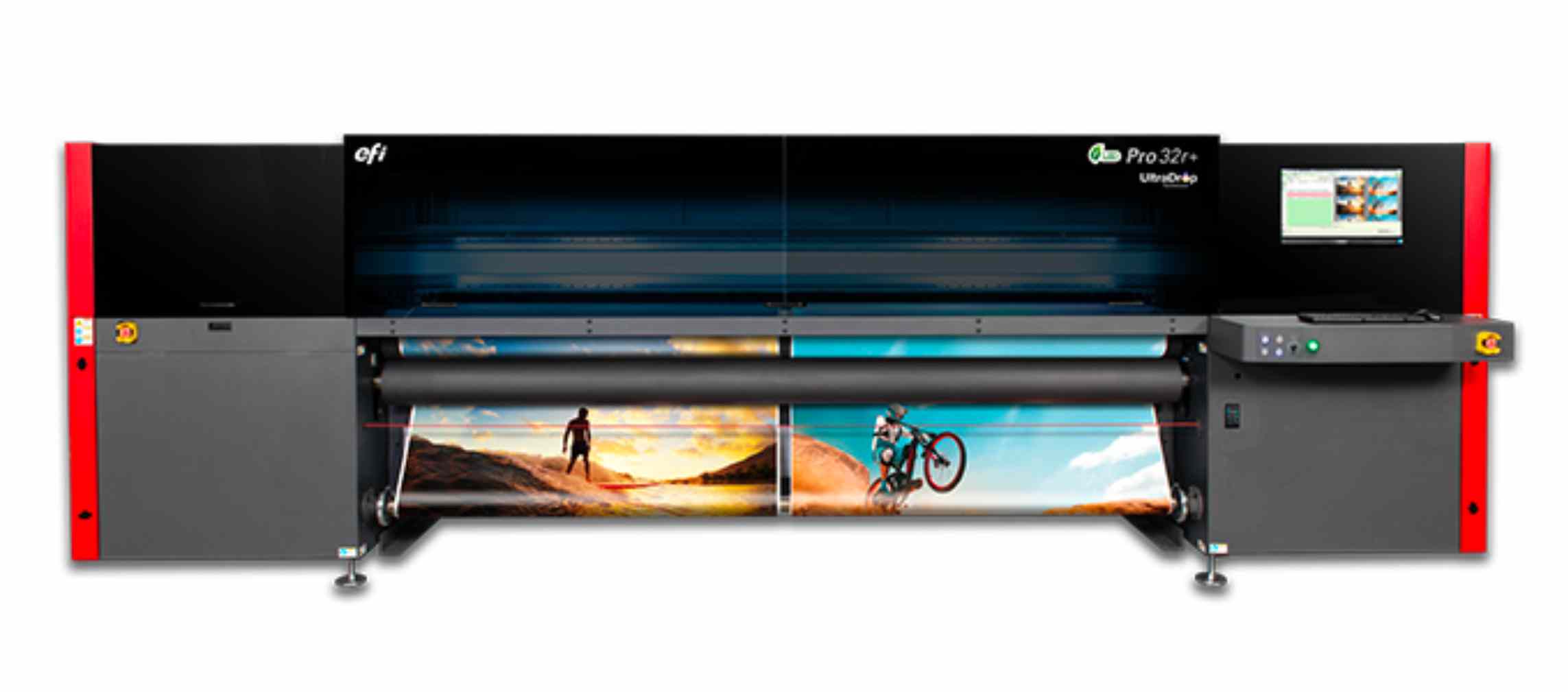
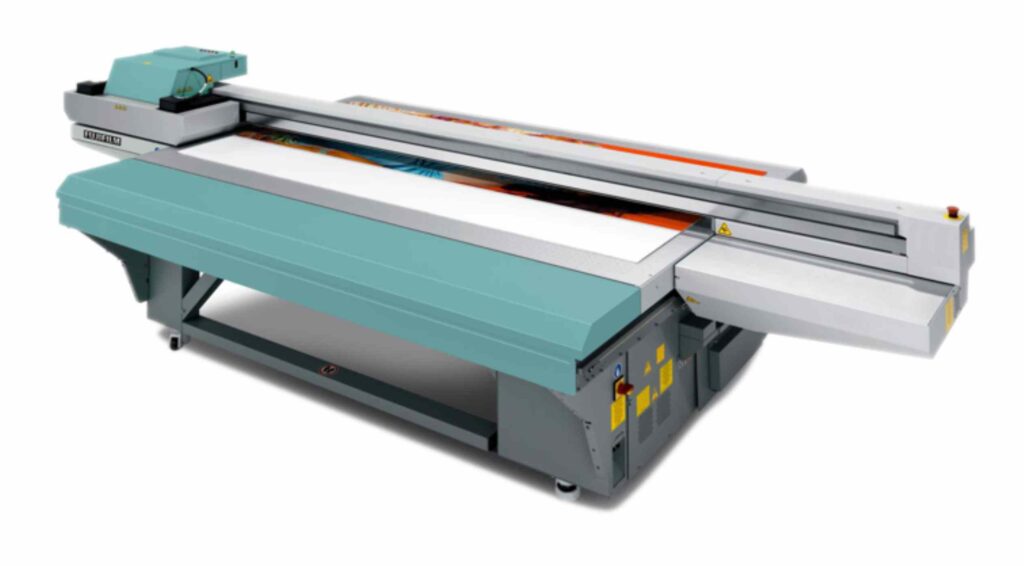
Beyond Retail’s company profile describes a production facility of more than one acre. Its infrastructure page and profile list wide-format UV, latex and eco-solvent printers, UV flatbed printing for direct printing on rigid sheet, screen printing, vacuum forming, digital cutting, a panel saw and a cold press, alongside CNC and edge banding. In plain terms, wood, metal, acrylic, board and printed graphics can be worked in the same place, which is what makes one schedule and one standard possible.
How to decide
| Your situation | Lean to |
|---|---|
| Many stores, repeated fixtures, tight brand standards | In-house vendor, with disclosure of any outsourcing |
| One-off or unusual specialist piece | Vendor with the right specialist partner |
| Short timeline with design changes likely | In-house, because corrections are faster |
| Remote locations | In-house production with regional installation |
What to look for on a visit
- Your kind of work in progress, not only finished samples.
- The same people and machines that will handle your order, not a showcase line.
- Material and finished stock stored in order, with labels that match drawings.
- A quality area with records, not just a poster.
- Printing, cutting and finishing in one flow, so a drawing change does not travel across town.
If some work is outsourced, control it
Disclosed outsourcing can be well managed. Ask for it to be written into the contract so you keep the benefits of specialists without losing accountability.
- A list of subcontracted steps and named subcontractors.
- The vendor remains responsible for the quality and timing of subcontracted work.
- Your right to inspect subcontracted work.
- First-article approval for every subcontracted part.
- No change of subcontractor without notice.
How in-house production changes the quote
A vendor with its own machines carries fixed cost, so it wants volume and a stable specification. A vendor without machines carries variable cost but pays a margin at each handoff. Neither is cheaper in every case. The difference shows in what happens when something changes. In-house, a corrected drawing is a corrected cut. Outsourced, it can mean a new slot, a new quote and a new delay.
Frequently asked questions
What is the difference between in-house and outsourced fabrication?
In-house means the vendor makes most of the order in its own facility. Outsourced means steps are sent to third-party workshops.
Is outsourcing bad?
No. It is reasonable for specialist processes or peak capacity, as long as it is disclosed and controlled.
How can I tell if a vendor is really a manufacturer?
Ask which steps are done in-house, visit while your type of work is in production, and check the machinery list against your order.
Does in-house always cost less?
Not per item, but it can lower rework and delay costs. Compare total cost.
Does Beyond Retail outsource?
Its public FAQ states that design, fabrication and digital printing happen in-house at its Delhi NCR facility.
See Beyond Retail’s custom retail fixtures and turnkey showroom and fixture execution. Share your fixture list and we will state which steps we do in our own facility and which, if any, we do not. Beyond Retail: Your complete retail execution partner.