Planning a Mall Activation or Pop-Up in India: Permissions, Timelines and What Actually Travels
A mall activation has a strange planning problem built into it: the stall only exists for a few days, but it has to be designed, approved and built as carefully as something permanent, on a much shorter runway and usually a tighter budget. The brands that get burned are the ones who treat it like putting up a stand at a trade fair, when it is closer to a compressed version of a full store fit-out.
Permissions take longer than people expect
Nothing goes into a mall’s common area without the mall’s sign-off, covering the concept, the dimensions, the materials and the dates. Agencies that run these activations routinely advise 10 to 15 days for planning and permissions on a standard setup, and about three weeks for anything larger. That clock should start the moment a date is in mind, not once the design is finished, because the permission process and the design process run in parallel, not one after the other.
Malls also set hard limits that a design has to respect from the first sketch. One pan-India activation network cites a standard maximum stall height of 8 feet, with select malls allowing up to 10, alongside separate rules on noise levels and where a stall can project into a walkway. Ask the specific mall for its own activation guidelines before designing anything, since these limits vary by property and are rarely published anywhere public.
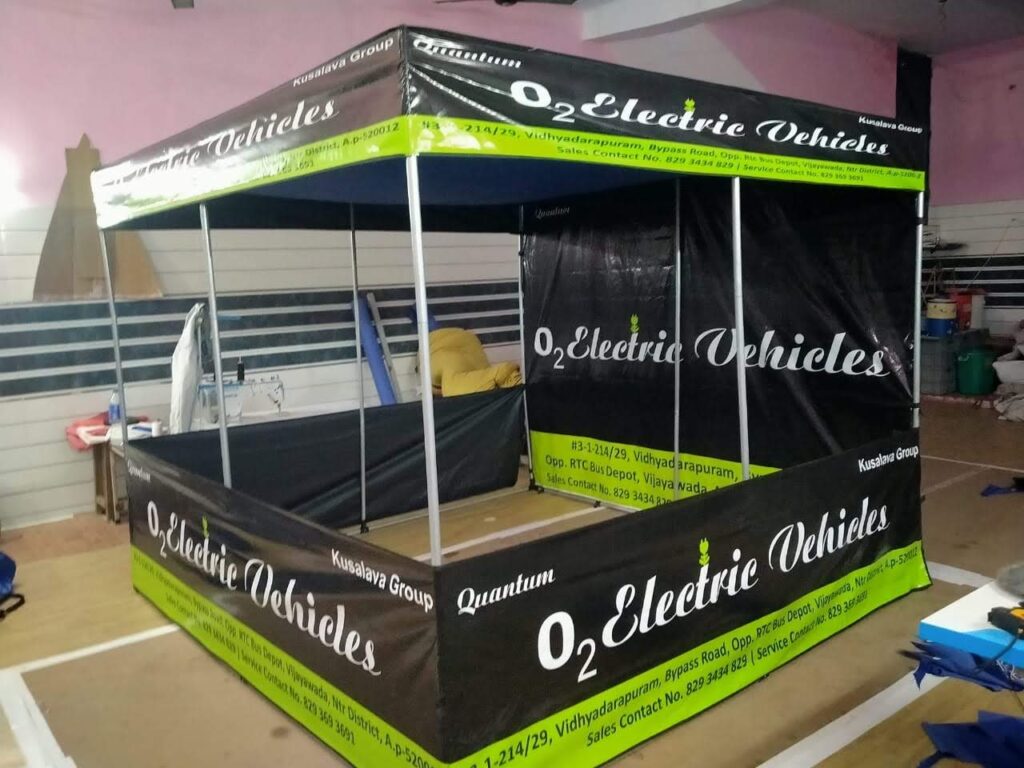
Setup and teardown windows are short
Most malls want a stall up and running before the doors open and gone without a trace once it is done. A fit-out and events guide describes a typical mall pop-up window of roughly 8 to 12 hours overnight for setup and 4 to 6 hours for teardown. That is not a lot of time to assemble a stall for the first time, which is exactly why a design meant for a mall activation should be built and test-assembled at the workshop first, so that what happens on-site is reassembly of a known structure rather than first-time construction under a deadline with mall security watching the clock.
Build for travel, not for permanence
A stall that has to survive repeated assembly, disassembly and transport between cities needs a different construction logic from a fixed-store fixture. Panels should bolt or clip together rather than being glued or built in place. Graphics should mount on a frame that can be reused across cities rather than being printed directly onto a structural panel that only works once. Everything should be light enough for a small crew to move without a crane or a forklift, since most malls won’t allow either inside. None of this is exotic; it is the same discipline that applies to a foldable or cutout standee, scaled up to the size of a stall.
Decide what the activation actually needs to do
A list of inclusions is a starting point, not a plan. Typical elements across pan-India activation providers include kiosks or fabricated booths, LED walls or screens, branded backdrops, sound systems, digital touch screens and interactive elements. The temptation is to include everything on that list. The better approach is to decide what the activation is actually for, product sampling, a launch demo, or pure brand visibility, and build a shorter list of elements that serve that purpose, rather than assembling a generic activation kit that could belong to any brand.
A rough budget shape
Costs vary enormously by scale, but one Indian activation agency’s public range gives a sense of the floor and ceiling: a single-day Tier-1 city mall activation from roughly ₹1.5 lakh, running up to ₹10 lakh to over ₹1 crore for a large-scale pan-India roadshow or an immersive brand experience zone. Fabrication, permissions, staffing and logistics all sit inside that range differently depending on scale, so ask any quote to break those out separately rather than presenting one lump sum.
Multi-city campaigns add a coordination layer
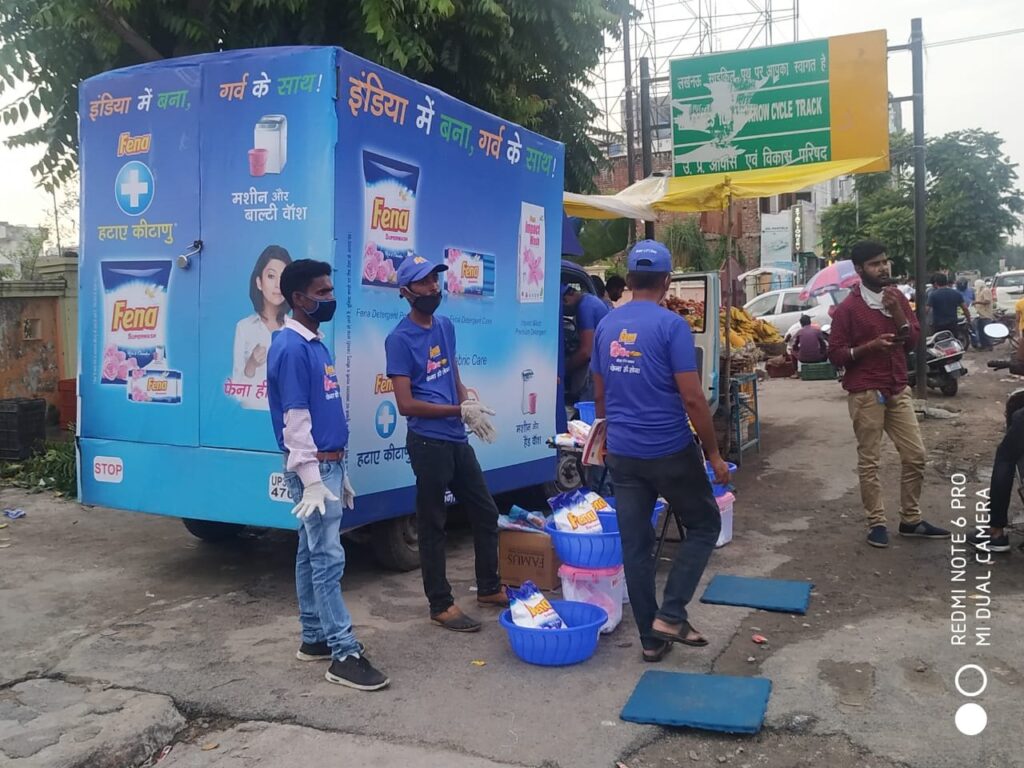
Running the same activation in several cities on the same or overlapping dates means duplicating the structure, not just the concept, and coordinating permissions with more than one mall management team at once. The practical answer is a kit built to assemble identically everywhere, with spare parts and a simple assembly guide travelling with each kit, so a local crew who has never seen the structure before can still put it together correctly.
Planning checklist
- Which malls, which dates, and has each mall’s own size and noise limit been confirmed?
- Has the permission request gone in with enough lead time, 10 days at minimum, three weeks for anything large?
- Is the structure designed to bolt together within the mall’s actual setup window?
- Can the same kit travel to a second city without being rebuilt from scratch?
- Is the budget broken into fabrication, permissions, staffing and logistics, so each can be checked separately?
Interactive elements raise the stakes on reliability
A growing share of mall activations now build in some interactive layer, a screen that reacts to a gesture, an RFID tag on a product that triggers content, or a photo moment customers share on their own. Product-triggered experiences, where picking up an item starts content on a nearby screen, are described as one of the more effective formats for bridging a physical product with a digital reaction, and they genuinely lift engagement over a static backdrop. The trade-off is that every added piece of technology is one more thing that can fail during the exact few days the activation exists, with no second chance if it breaks on day one. If an activation leans on an interactive element, build in a backup, whether that is a spare unit, a static fallback version of the same content, or an on-site technician for the full run, rather than assuming it will simply work.
Risk, insurance and the people side
A temporary structure in a crowded walkway carries its own liability questions that a permanent store doesn’t raise in the same way: public liability cover for the activation, clear sign-off from the mall’s fire and safety team on materials and layout, and a staffing plan for peak footfall hours so the stall doesn’t become a crowd bottleneck. These are usually standard parts of a professional activation agency’s scope, but if a brand is running part of this in-house, it is worth confirming explicitly rather than assuming the mall’s own security covers it. None of it is exotic, but all of it belongs in the planning timeline alongside the permission and fabrication schedule, not bolted on at the last minute.
Deciding what counts as success before the stall goes up
“How did the activation go” is a question that only gets a useful answer if someone decided what good looks like before the event ran, not after. Footfall past the stall is the easiest number to capture and the least informative on its own; engagement rate, the share of footfall that actually interacted with the activation rather than just walking past, is the number that shows whether the design itself worked. A useful benchmark from experiential marketing practice puts 25 to 40 percent of footfall completing a meaningful interaction as a reasonable target for a mall or festival activation, which gives a brand something concrete to hold a format against rather than judging it on vibes.
Beyond the day itself, the metrics that actually justify the spend to a budget holder are the ones measured afterward: leads collected and followed up, product trial or sampling redeemed, and, where the activation is tied to nearby stores, any uplift in footfall or sales at those locations in the following weeks. Agreeing on which of these will be reported, and how each will be calculated, before the activation runs avoids the common problem of every event being measured a different way and none of them being comparable to the last. A one-page brief settled in advance, naming the two or three numbers that matter for this specific activation, is worth more after the fact than an elaborate report built from whatever data happened to be collected.
Beyond Retail fabricates standees, kiosks, counters and illuminated display elements in-house that can be built into an activation stall, and its point-of-sale materials and events, exhibitions and activations pages cover that range. If you have mall dates and a rough concept, share them early enough that the permission timeline and the fabrication timeline can run alongside each other instead of one waiting on the other.