Ensuring Franchise Visual Consistency: How Modular Retail Fixtures Protect Brand Identity
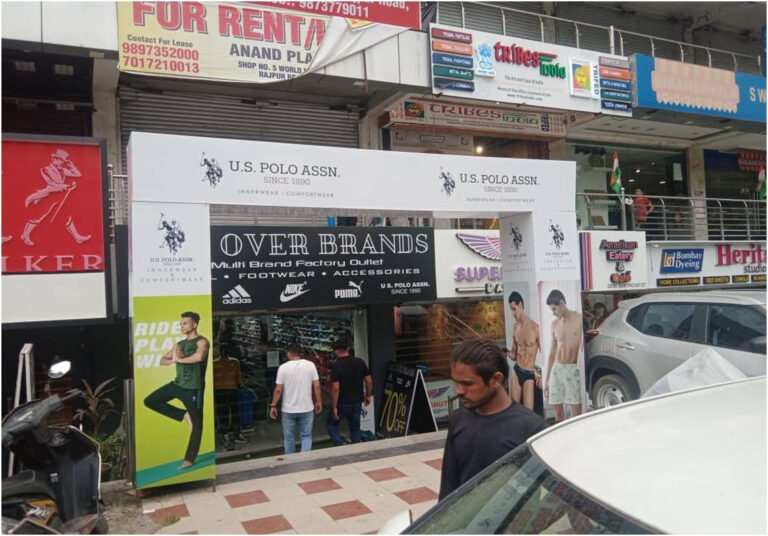
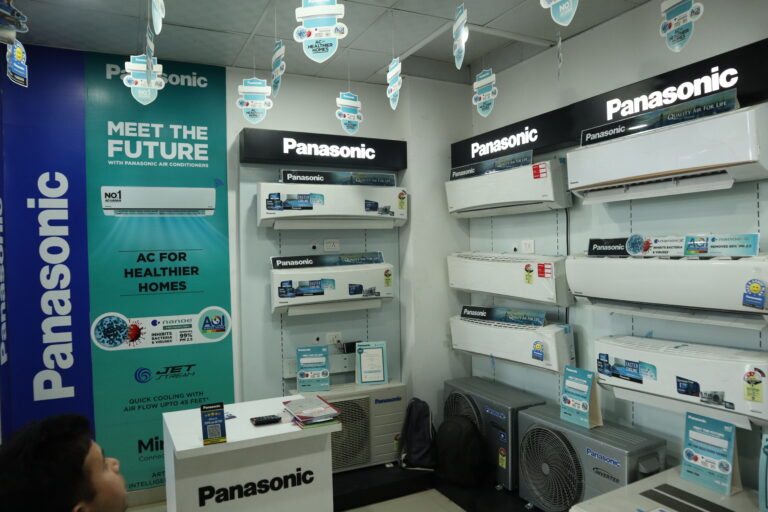
A franchisor controls the brand but not the shop. The franchisee owns the lease, pays the contractor and, if the franchisor is not careful, chooses the carpenter. Two years later the outlets in Pune and Lucknow carry the same logo and different counters, different shelf heights, different lighting. Customers notice before the franchisor does.
Modular fixtures are one of the most practical tools against this drift, but only when they sit inside a wider system of contract terms, a design manual and an approved supply route. This guide explains that system, what to lock and what to let flex, and how a fixture kit works in practice. For formats, see our guide to exclusive stores, shop-in-shops and multi-brand counters.
In India the contract carries the weight
A legal explainer for retail franchisors points out that India has no dedicated franchise legislation, no mandatory disclosure document and no registration of franchise systems, so the relationship rests on the contract under the Indian Contract Act, 1872. The same source lists clauses it treats as essential, including an obligation on the franchisee to build and maintain the outlet strictly in line with the franchisor’s design manual, covering layout, fixtures, signage and visual merchandising. It also notes that many retail franchisors mandate approved suppliers, and that store layout, signage, colours and fixtures act as brand identifiers whose treatment after termination should be explicit.
That is general information, not legal advice. The practical point is that a design manual only works if the contract makes it binding and the fixtures can be bought without improvising.
What drift looks like
- Finish: the same laminate code sourced from a different supplier, with a visibly different shade.
- Dimensions: counter and shelf heights adapted to what a local carpenter prefers.
- Signage: a different board size, lighting type or material.
- Lighting: another colour temperature, which changes how products and finishes look.
- Substitutions: a cheaper material that wears badly and has to be replaced early.
One franchise-design guide describes the cause plainly: franchisees are independent operators who are more likely to make local adaptations that deviate from brand standards when they believe it will drive sales. The answer is rarely stricter policing. It is a kit that makes the compliant route the easiest one.
The kit-of-parts model
A design-system approach to franchise stores bundles a kit of parts, covering layouts, finishes, signage and lighting, with governance such as approvals, training and audits. The same guide recommends one baseline plan with two or three footprint variants, finish and signage tokens with approved equivalents, and lighting scenes with set lux targets. Applied to fixtures, that looks like this.
- A baseline store plan and two or three size variants, for example compact, standard and flagship.
- A fixture family built from common modules: wall systems, gondolas, tables, counters, headers and shelf accessories.
- Fixed interfaces between modules, so parts from any production batch fit together.
- Changeable graphics and headers, so campaigns change print, not structure.
- A finish library with named approved equivalents.
- Spare parts and repair parts drawn from the same kit.
This is the same logic that makes custom retail fixtures repeatable across stores: design once against a controlled specification, then reproduce.
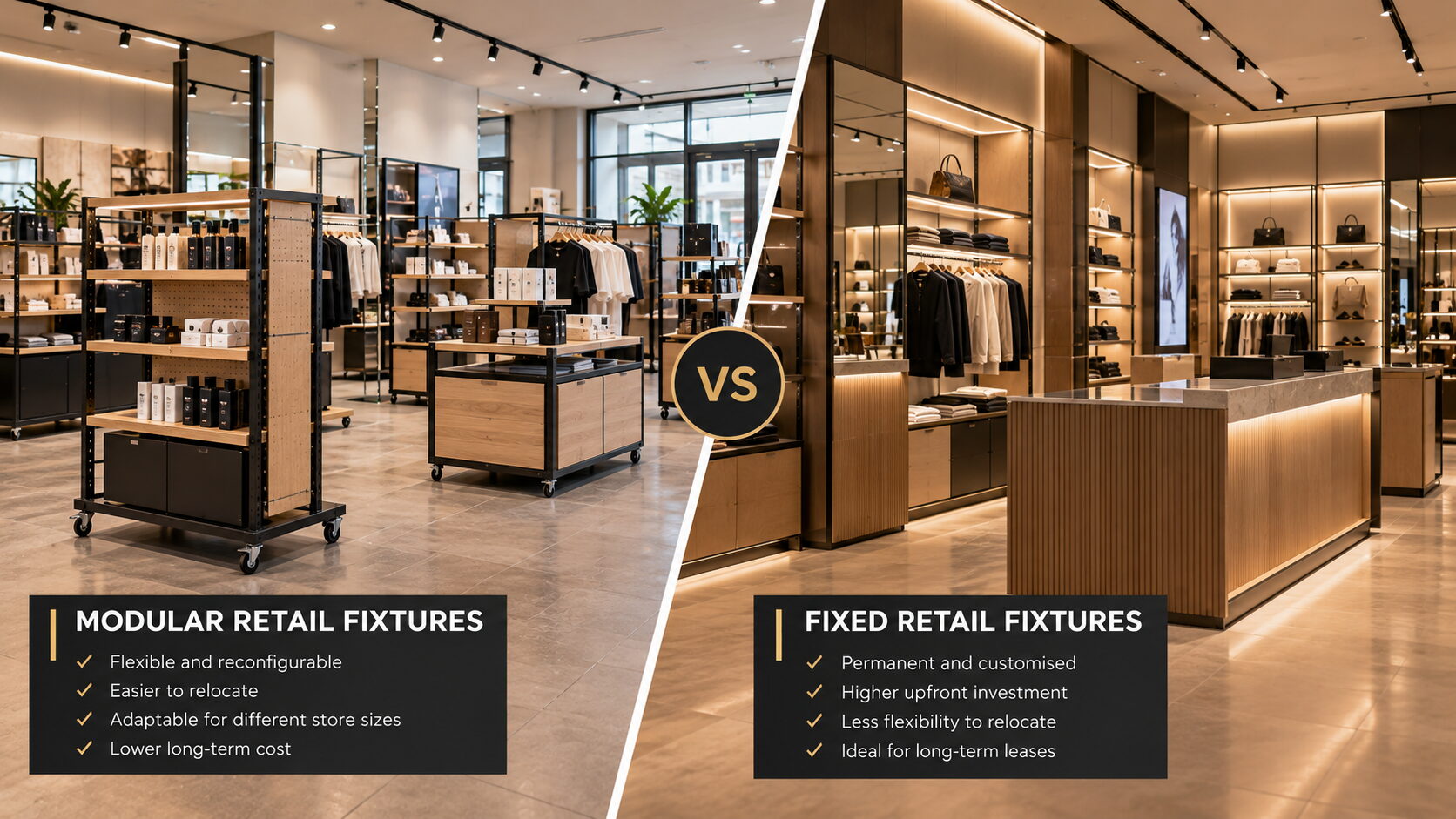
Why modular protects identity better than ad hoc joinery
| Aspect | Ad hoc local joinery | Modular kit from an approved source |
|---|---|---|
| Dimensions | Vary by carpenter and site | Fixed by module size, with defined combinations |
| Finish | Depends on local supply | Controlled finish library and production batches |
| Fit to different footprints | New drawing for each store | Recombine modules within the size variants |
| Repairs | Matching a one-off is hard | Replace a module from the same kit |
| Refresh and relocation | Often demolish and rebuild | Re-skin graphics, move or reconfigure modules |
| Audit | Compare against a drawing by eye | Compare against a parts list and photos |
Modular construction has trade-offs. Standard modules fit unusual spaces less perfectly than purpose-built joinery, which is why the kit should allow a small number of site-specific elements. We cover the decision in detail in our comparison of modular and fixed fixtures.
Decide what is locked, what flexes and who decides
| Locked | Allowed to flex within limits | Needs franchisor approval |
|---|---|---|
| Fixture modules and dimensions, finish library, signage design, colour and material of key brand elements, lighting specification | Number of shelf runs, choice of size variant, local product mix at the entrance, positions of power points | Any new fixture type, material substitution, change of signage size or illumination, relocation of the brand wall |
Write this table into the design manual and into the franchise agreement. Where the manual allows flexing, say who decides and in how many days, otherwise franchisees will decide first and ask later.
Make the approved route the easy route
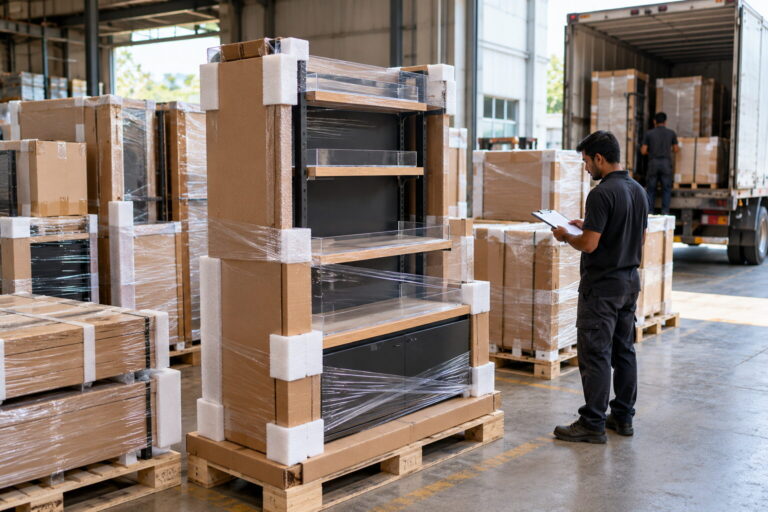
A franchise-fixtures guide describes the specification package as defining approved materials, dimensions, finishes, hardware, installation standards, ordering details and acceptable substitutions before a franchisee reaches the purchasing stage. In practice, give franchisees:
- A kit price list by store size, with lead times.
- An ordering route with one named contact, not a search for suppliers.
- An installation guide and, where needed, an approved installer.
- A short approved vendor panel for items outside the kit, such as civil work.
Franchisees compare prices. If the approved kit is clearly priced and delivered on time, there is less reason to go to a local fabricator. Keep the supplier list current, since a legal guide on franchise disputes lists maintaining the approved supplier list as a preventive step.
Check at opening and afterwards
A brand standards audit scores a store against the franchisor’s manual: exterior identity, fixture and furniture standards, product presentation, signage and the overall customer experience. Run one at opening, then on a schedule. Our retail store rollout plan covers how handover checks fit into the programme. Combine audit rights with corrective action timelines in the franchise agreement, so a finding leads to a fix.
A short checklist for franchisors
- Design manual with drawings, fixture schedule, finish library and lighting specification.
- Three footprint variants built from the same modules.
- Agreement clauses on design compliance, approved suppliers and audits (reviewed by counsel).
- A priced kit with lead times and one ordering contact.
- Opening inspection and a recurring audit.
- A parts and repair plan, so replacements match.
Frequently asked questions
How do franchisors keep stores visually consistent?
By combining a binding design manual, approved suppliers, a standard fixture kit and regular audits. Consistency fails when franchisees must source fixtures on their own.
Are modular fixtures suitable for franchise stores?
Usually yes, because fixed module sizes, finishes and interfaces make stores comparable and repairable. Unusual spaces may still need a few site-specific elements.
Does India have a franchise law?
Not a dedicated one, according to a legal explainer. The relationship is governed by the franchise contract under the Indian Contract Act, so the design and supplier clauses matter. Take legal advice.
Should franchisees be allowed to choose their own fixtures vendor?
Most franchisors approve suppliers or supply a kit, since vendor choice is where finish and dimension drift begins.
How often should franchise stores be audited?
At opening and on a regular schedule agreed with the franchisee, with corrective action timelines.
Beyond Retail designs fixture kits in 3D and fabricates them in-house at its Delhi NCR facility, with printing done in the same place and execution across India. That suits a franchisor that wants one source for the kit. Its turnkey showroom and fixture execution page shows how projects are organised. If you are planning or scaling a franchise network, share your network plan, formats and cities and we can propose a kit structure and a pilot outlet to test it. Beyond Retail: Your complete retail execution partner.