The most expensive sign in a rollout is the one made correctly and then not allowed. It happens because signage feels like a manufacturing task, so it is specified and produced like one, while the rules that decide whether it can go up sit with the municipality, the landlord and, in a mall, the leasing team. Each of those can be different in every city on your list.
This guide explains the layers of approval, gives real examples of how rules differ between cities, and shows how to build approvals into a rollout programme. It is not legal advice. Fee schedules and policies change, so each city’s rule must be confirmed with the local body before work starts.
Three layers of approval
| Layer | Who decides | What they look at |
|---|---|---|
| Municipal permission | Municipal corporation or area council | Size, position, illumination, fee, whether the advertisement is allowed on that premises |
| Landlord, society or mall | Owner, building society or mall leasing and design team | Design and material, fixing method, illumination, brand consistency with the mall’s own criteria |
| Technical safety | Licensed electrician or engineer, sometimes the authority | Electrical safety for lit boards, structural stability for larger or projecting boards, fire rules inside malls |
How municipal rules differ: three examples
The examples below are drawn from published policies and guides. They are illustrations of difference, not a checklist for those cities, so verify current rules before acting.
| City or area | What the sources say | Source type |
|---|---|---|
| NDMC area, Delhi | Under its outdoor advertisement policy, shop self-signage is limited, with the total area capped at 2.5 square metres and not extending beyond the shop’s length, and prior written permission is required | News report on NDMC policy; NDMC enforcement policy document |
| Delhi (MCD areas) | A signage licence guide says advertisements need prior written permission under the Delhi Municipal Corporation Act, section 143, with fees set by a schedule | Legal explainer (secondary source) |
| Mumbai | BMC’s draft outdoor advertising policy of 2024 includes a procedure for permission to display advertisement boards, including glow signs and illuminated boards, on business premises | Municipal draft policy document |
Documents asked for are broadly similar. A 2026 guide to shop name board rules lists a trade licence, a board design with dimensions, a no-objection certificate from the landlord or building society, and electrical safety certification for illuminated boards. Treat that as a typical set to prepare, then confirm each city’s own list.
Why this becomes a rollout problem
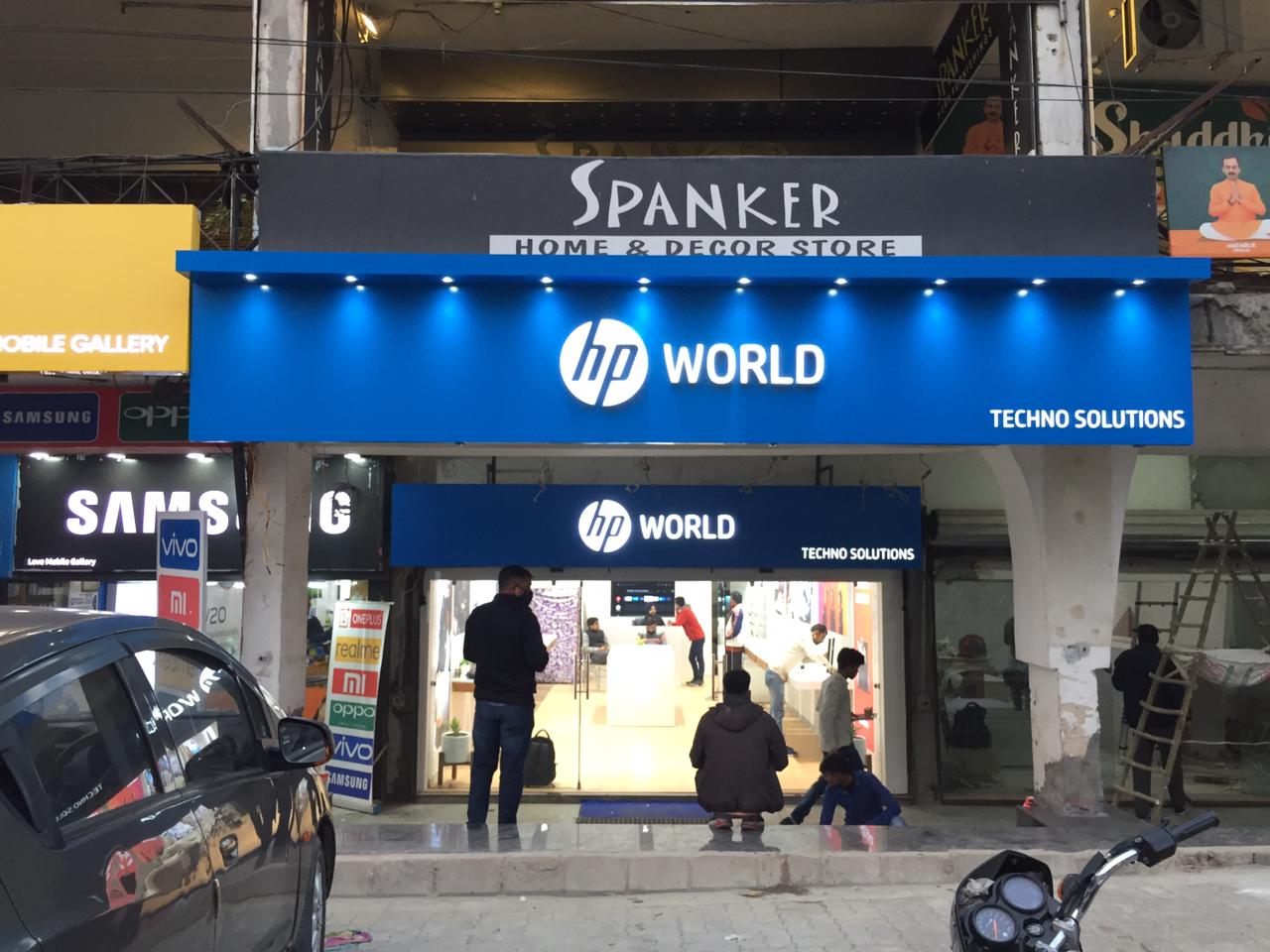
A single shop owner deals with one set of rules. A programme with fifty locations meets fifty combinations. A sign family approved in one city may be larger than another city’s limit. A mall may reject an exposed LED strip that a high-street shop is free to use. A signage vendor notes that local restrictions are often discovered only after fabrication, when a redesign costs more than the planning would have.
The fix is to separate what is standard from what is local. Design a family of sizes and illumination options, for example a full-size lit board, a compact lit board and a non-lit option, so that a size limit in one town selects another member of the family instead of triggering a redesign. Our custom signage guide explains the board choices.
Build approvals into the programme timeline
- Store list and survey first: frontage width, existing board, landlord details, mall or street location, power access.
- Rules check per city: size limit, illumination rules, fee, who applies, expected processing time. Record the source and date.
- Select the sign family member for each store from the approved family.
- Apply for permission and landlord or mall consent in parallel, not one after the other.
- Fabricate only after approval. If time is tight, produce standard components at your own risk and finish only after approval.
- Install, then file the proof together with permit details. Some policies expect permission details to be displayed on the advertisement, so check if yours does.
The same logic sits behind our retail store rollout plan: survey before design, and approvals before production.
Keep a rules register
Once the store list is fixed, build one register with a row per city. Record the authority, the size limit, any illumination rule, the fee, who applies, the expected processing time, the source link and the date you last checked it. The date matters because policies are revised and an old page is the usual source of a wrong assumption. Ask the authority or your local team for processing times instead of guessing, and keep a buffer, since a refused or queried application restarts the clock.
Who applies, the brand or the vendor?
The applicant is usually the occupier of the premises, that is the store operator or the brand, because the permission attaches to that premises. A vendor can support with drawings, dimensions and material details, and some manage the paperwork under a separate agreement. Put this in the contract, including who pays fees and who carries the cost of a redesign if an application is refused.
A pre-fabrication checklist
- Measured frontage and photographs for every store.
- City rule sheet showing size, illumination, fee and source for each city.
- Landlord, society or mall consent obtained in writing.
- Electrical load and safety certification planned for lit boards.
- Approved sign family and the mapping from each store to a family member.
- Named applicant and fee payer for each city.
Frequently asked questions
Do I need permission for a shop signboard in Delhi?
Published policy and legal guides indicate that advertisements visible to the public need prior written permission from the relevant civic body, with different bodies for NDMC and MCD areas. Confirm the current rules and fees with the body that governs the shop.
What is the size limit for a shop signboard in NDMC areas?
Reports on the NDMC outdoor advertisement policy describe a cap of 2.5 square metres of total self-signage, not extending beyond the shop’s length. Check the current policy before design.
Does a mall need separate signage approval?
Usually yes. Malls publish tenant design criteria that govern signage design, materials and illumination, in addition to any municipal rules.
Who should apply, the brand or the signage vendor?
The occupier normally applies. A vendor can supply drawings and may handle paperwork under a separate agreement. Decide this in the contract.
What happens if a sign is installed without permission?
Authorities can act against unauthorised advertisements. NDMC has asked shopkeepers to bring signage in line with its policy, so rework or removal is a realistic risk.
Beyond Retail designs, fabricates and installs signage, including illuminated formats, and builds 3D drawings that can support an application. Our signage services page lists what we make. If you have a city list and board types, share them and we can help structure a sign family that survives local rules before production starts.