Acrylic vs ACP vs Sunboard: Choosing the Right Material for Retail Display Units and Wall Branding
Most materials in a retail brief are chosen late and by habit. Acrylic gets specified because it looks premium, ACP because the last fascia used it, sunboard because it is cheap. Each choice can be right. Each can also fail in a way that shows within a season, and the failure is usually a mismatch between the material and where it is used, not a bad product.
This guide compares the three on look, strength, outdoor life, weight, cost and fabrication, and then maps them to the jobs retail brands actually need: counters and display units, fascia and wall branding, and POSM.
First, the names
Acrylic is PMMA sheet, sold as clear, coloured, mirror and frosted. ACP is aluminium composite panel, two thin aluminium skins bonded to a core, called ACM in some countries. Sunboard is the Indian trade name for PVC foam sheet. A printing supplier describes it as a PVC foam sheet, water resistant, in thicknesses from 3 mm for small indoor signs to 5 mm for standard signage and 8 mm and above for stronger outdoor boards. It is not the same as paper-faced foam board, which has a paper skin and does not tolerate moisture.
The comparison
| Factor | Acrylic | ACP | Sunboard (PVC foam) |
|---|---|---|---|
| Look | Glass-like clarity, high gloss, premium | Flat, clean, modern, many finishes | Matte to semi-gloss, functional |
| Strength | Brittle compared with PVC or polycarbonate, and scratches more easily than ACM | Rigid with a good strength-to-weight ratio; a common choice for long-term outdoor panels | Light and easy to cut; less rigid and less durable |
| Outdoor life | About 5 to 10 years or more in one comparison, though other guides give shorter figures with coatings | Longest of the three for flat outdoor panels | About 2 to 5 years in the same comparison |
| Weight | About 3.6 kg per square metre at 3 mm | Moderate | About 1.5 kg per square metre at 3 mm |
| Illumination | Better for glowing letters and edge-lit logos | Backing and base for lit letters, not a light source | Not for lit work |
| Cost | Highest per area | Mid | Lowest |
Figures differ between sources because grade, thickness, coatings and exposure differ. One guide gives acrylic only 2 to 3 years outdoors without a UV coating, another says 5 to 10. Use the numbers to compare materials with one another, not as warranties.
Acrylic: when the surface is the product
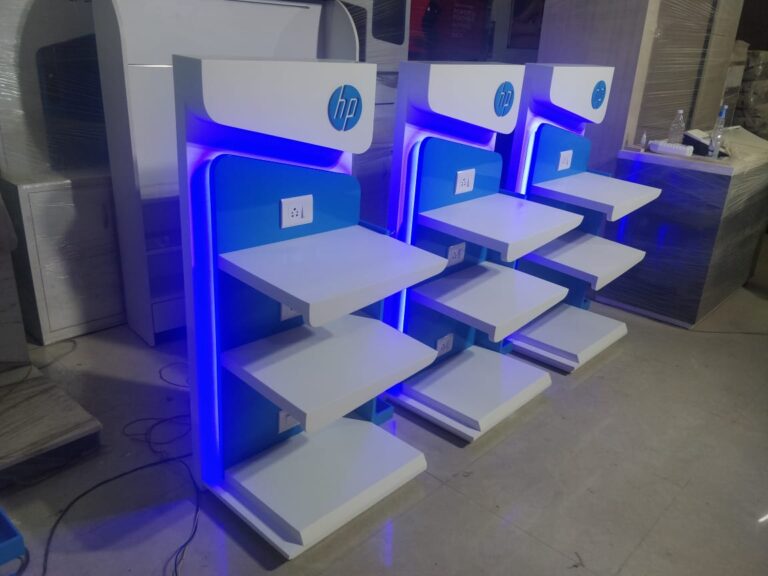
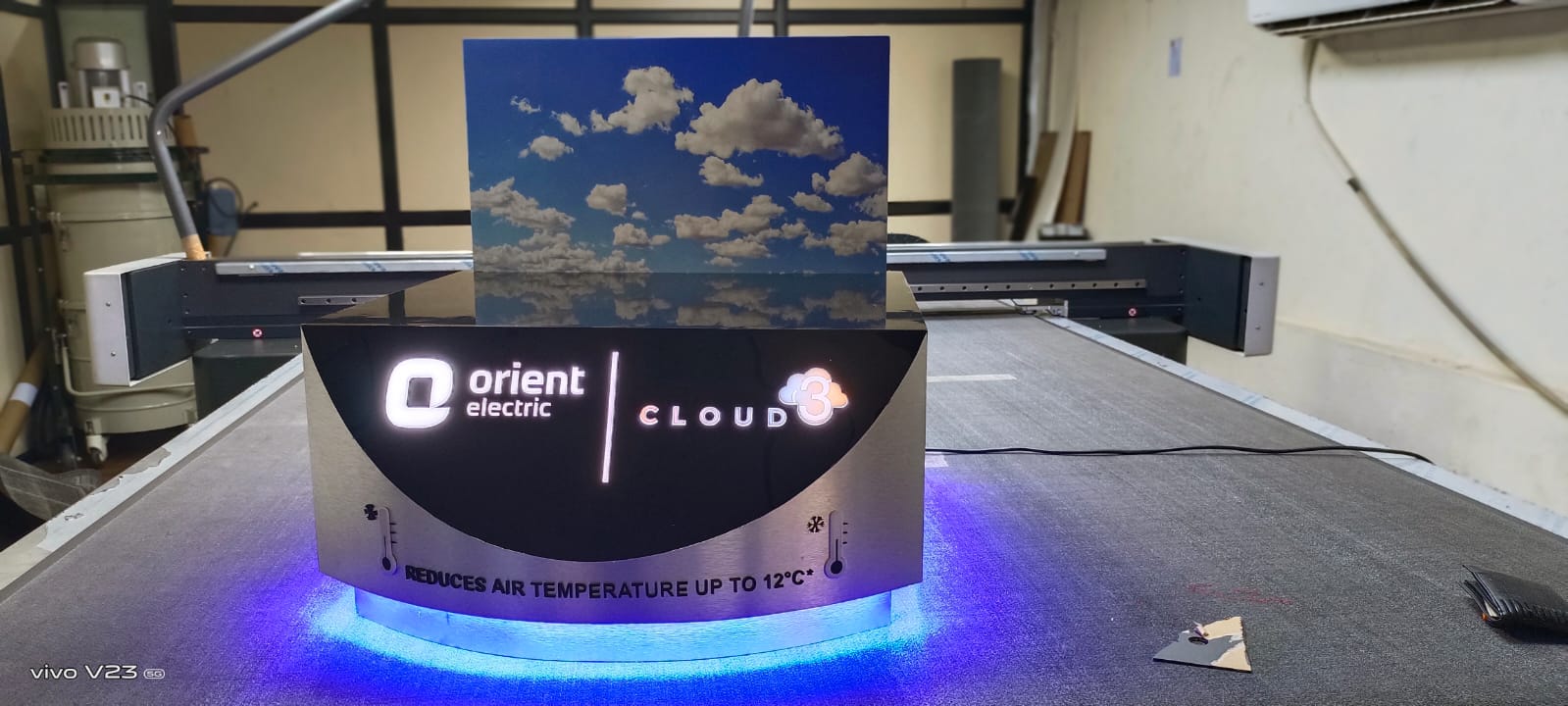
Acrylic earns its cost where people look closely and where light is involved: cosmetics and electronics counters, edge-lit logos and brand walls, risers and shelves. It laser-cuts precisely and polishes well. Its weaknesses are brittleness and scratching, so avoid it where it will be knocked or wiped hard, and protect it in transit. For a premium indoor counter, acrylic is often the right material. For a large outdoor board, usually not.
ACP: when the surface must last outdoors
ACP is the workhorse of fascia and cladding. A signage guide says ACP is the go-to material for most commercial signage deployments, and retail chains and restaurants often standardise on it for its cost-to-lifespan ratio. Another notes that ACP with 3D acrylic or stainless steel letters is a strong outdoor combination, because ACP gives a flat, weather-ready background. Specify panel grade, thickness, frame and sealant, and ask whether the board faces direct sun or wind. ACP also works as structural backing for heavy boards and as interior wall cladding.
Sunboard: when the job is short or light
Sunboard suits standees, shelf and counter POSM, promotional panels and temporary displays. It is the cheapest of the three: one signage guide puts PVC foam board at about ₹30 to ₹50 per square foot for indoor and short-term use. It is light, which lowers freight, and it takes direct printing well. Its limits are rigidity and outdoor life. A comparison of sign substrates puts it as the lowest sticker price with the shortest outdoor life. For long programmes, replacing sunboard repeatedly can cost more than a sturdier material once.
Indian price signals, with a caution
Prices are mostly published by sign shops and cover finished work, not sheet. One Indian vendor lists an ACP sign-board base at ₹220 to ₹450 per square foot and an LED sign board with acrylic letters at ₹850 to ₹3,500 per square foot. These include fabrication and different scopes, so they are not comparable to material rates. Ask every vendor for price by material, thickness and finish, on the same drawing.
Which material for which job
| Job | Best choice | Why | Watch for |
|---|---|---|---|
| Cosmetics or electronics counter, risers, shelf strips | Acrylic | Clarity, polish, edge-lit effects | Scratches, brittleness |
| Edge-lit logo or lit brand wall | Acrylic | Light guiding and finish | Thickness for even light |
| Exterior fascia, cladding, structural board backing | ACP | Weather resistance and rigidity | Grade, frame, sealant |
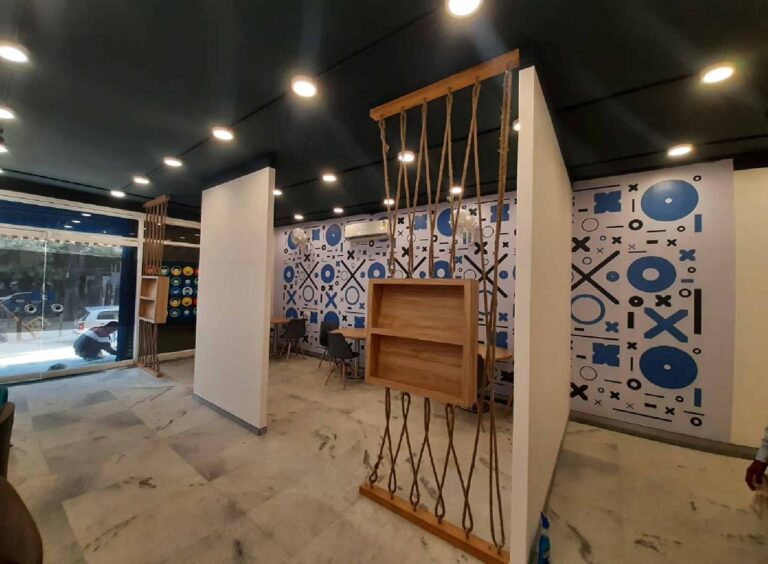
| Interior wall branding panels | ACP | Flat, rigid, many finishes | Joints and fixing |
| Standees, shelf POSM, temporary promos | Sunboard | Light, cheap, printable | Short life, rigidity |
| Long-run POSM in busy stores | ACP or acrylic | Handles wear | Cost and weight |
Printing and fabrication
All three can be printed directly on a UV flatbed machine, which removes the need for pasted vinyl. See our guide to direct UV printing on rigid substrates for the trade-offs. Cutting also differs: acrylic is laser-cut or CNC-routed, ACP is routed and folded, and sunboard is cut and routed easily. Ask whether the vendor works all three in-house.
How to write the material line in your RFP
- Material and grade, for example ‘ACP, 4 mm, stated skin thickness, printed finish’.
- Thickness for each part, not a general ‘acrylic’.
- Finish and colour code, and approval of a physical sample.
- Indoor or outdoor, expected life and wind exposure.
- Fixing method and backing, especially for heavy boards.
- Packaging for fragile items such as acrylic.
Frequently asked questions
What is sunboard?
Sunboard is the Indian trade name for PVC foam board, a lightweight water-resistant sheet used for signs, standees and displays.
Is ACP better than acrylic for outdoor signs?
For flat outdoor panels, ACP generally gives the longer, more practical life. Acrylic suits lit letters and premium faces, and can be mounted on an ACP background.
What thickness of sunboard should I use?
One supplier suggests 3 mm for small indoor signs, 5 mm for standard signage and 8 mm or more for stronger outdoor boards.
Is acrylic more expensive than ACP and sunboard?
Usually yes, per area, for comparable thickness. Sunboard is the cheapest.
Can I print directly on these materials?
Yes. UV flatbed printers can print directly on acrylic, ACP and PVC foam sheet. Surface preparation affects adhesion.
Beyond Retail fabricates in all three materials and prints directly on sunboard, acrylic, ABS, ACP and poly sheet at its Delhi NCR facility, as listed on its infrastructure page. See its signage and point-of-sale materials work. Send your product list with use, quantities and finish, and we will recommend materials line by line.