Cosmetics Store Display Fixtures: Custom Makeup Displays, Tester Units and Retail Counters
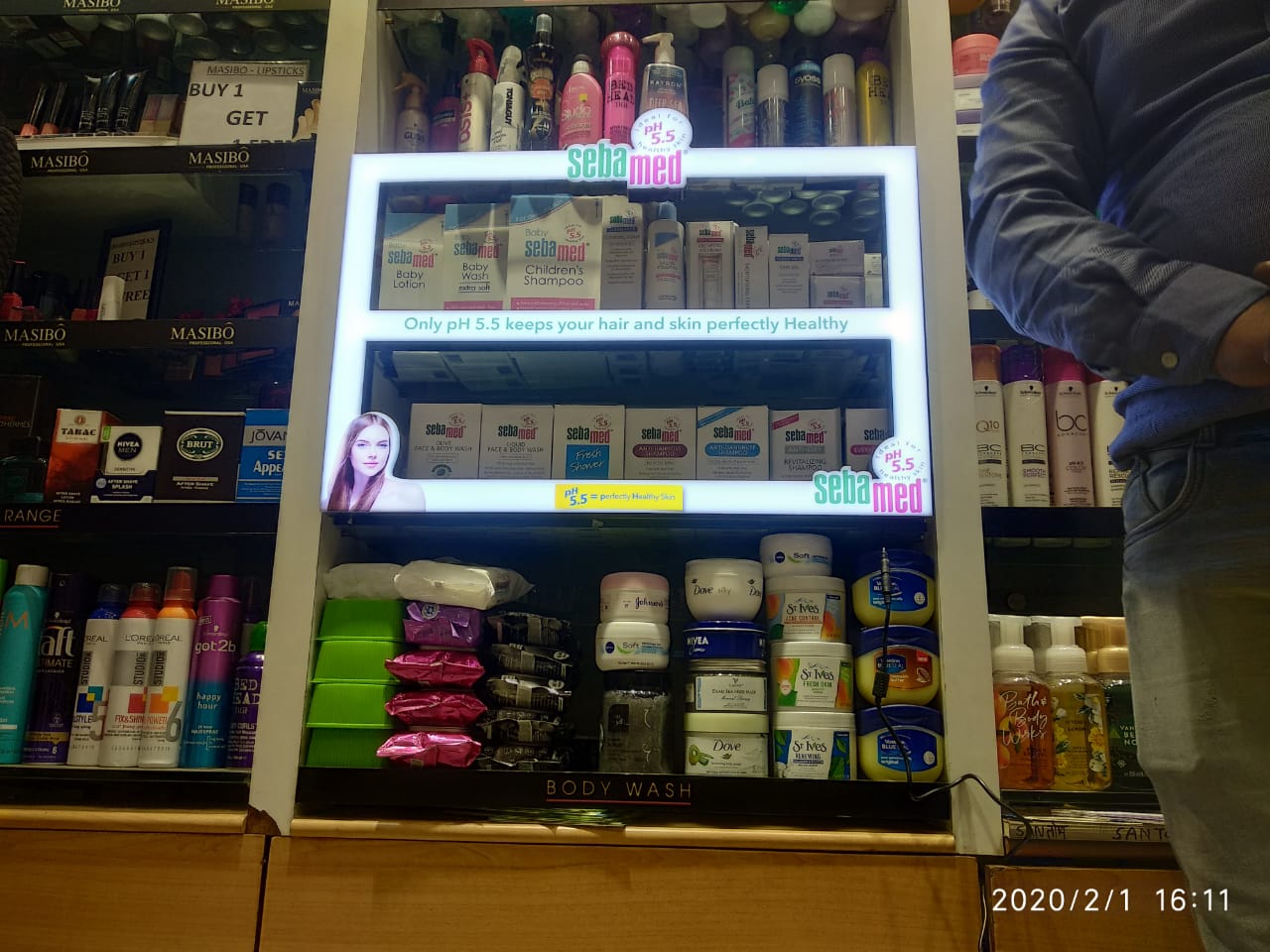
A cosmetics display has a job that general fixtures do not: it must make a shade look the way it will on the customer’s face, under the store’s own light, before they buy. If it cannot, returns rise whatever the product quality. Beauty fixtures also face a second problem that most categories avoid: hygiene at a unit that customers touch and sample from all day.
This guide explains the fixture types, how lighting and testers should be designed, how to size wall cabinets, and what to put in a buying brief.
The fixture types
| Fixture | Role | Notes |
|---|---|---|
| Wall cabinets | Hold the main range on the perimeter | Typically 24 to 48 inches wide, 12 to 24 inches high and 6 to 12 inches deep as interlocking modular sections, about 600 to 1,200 by 300 to 600 by 150 to 300 mm |
| Tester units or bars | Where customers sample | Need mirrors, accurate lighting, disposables, cleaning supplies and a bin, separate from sealed stock |
| Counters | Billing and consultation | Storage below, lockable, lit header for the brand |
| Central islands | Hero product or fragrance | A round, internally lit island approachable from every side suits boutiques of 50 to 70 square metres |
| Gondolas and towers | Volume lines and promotions | Use for lower-value items and campaigns |
Lighting first
Premium displays use glass and acrylic cases with integrated LED lighting and a high colour-rendering index for accurate shade matching, designed in from the start. Lighting also guides attention: layered lighting creates a visual hierarchy, and warmer accent light suits fragrance or luxury zones. A skincare wall can run cooler and brighter, a fragrance island warmer and softer, provided the change between zones is deliberate. Ask for CRI and R9, and test shades under the proposed light.
Design testers properly
Testing is still central. Despite advances in retail technology, the category still depends heavily on tester-based merchandising. A tester unit needs a mirror, good light, tissue, applicators, a cleaning supply and a used-product bin, with a clear physical separation from sealed stock. Hygiene belongs in the design: single-dose or pump testers, visible disposables, a used-product bin and daily sanitising built into the store routine.
Check cabinet depth against the aisle
Depth changes the floor plan. A 30 cm wall cabinet versus a 40 cm one changes the width of the aisle in front of it. In a small store, choosing depth for display capacity alone can make the aisle uncomfortable. Draw the fixture and the aisle together, and review it with the visual merchandising plan described in our guide to visual merchandising basics.
Materials and finish
Glass and acrylic dominate premium cases, with laminate, veneer or painted MDF for structure and metal for frames. Choose finishes that survive frequent wiping, and avoid porous surfaces on tester areas. Confirm that products and cleaning agents do not damage the finish, by testing a sample.
A buying brief for cosmetics fixtures
- Product list by category, with sizes, testers per product and stock per bay.
- Lighting specification: CRI, R9, CCT, integrated or ceiling, driver access.
- Tester unit design: mirror, disposables, bin, cleaning, separation from sealed stock.
- Wall cabinet module sizes and depth checked against the aisle.
- Counter storage, lock and billing arrangements.
- Finish samples, tested for cleaning.
- Graphics, headers and brand elements that can change by campaign.
- Delivery, installation and sign-off by store.
Frequently asked questions
What fixtures does a cosmetics store need?
Wall cabinets for the main range, tester units, a billing or consultation counter, and often a central island or gondolas for hero products and promotions.
How should makeup testers be displayed?
On a unit with a mirror and accurate lighting, with disposables, cleaning supplies and a used-product bin, kept separate from sealed stock.
What lighting is best for a makeup display?
High colour-rendering LED lighting, designed into the fixture, with layered ambient and accent light.
What size should a wall cabinet be?
Common sizes are about 600 to 1,200 mm wide, 300 to 600 mm high and 150 to 300 mm deep in modular sections, but check depth against your aisle width.
How do you keep tester areas hygienic?
Use single-dose or pump testers, keep disposables visible, provide a bin, and sanitise daily.
Beyond Retail designs and fabricates custom retail fixtures in-house, including illuminated and changeable-graphic formats through its point-of-sale materials work. Its project portfolio includes work for beauty brands such as Lakme, so bring your lighting and tester brief early. Share your floor plan and we will respond with a fixture schedule.