Apparel Store Fixtures in India: Wall Systems, Racks, Mannequins and Fitting Rooms That Make Clothes Sell
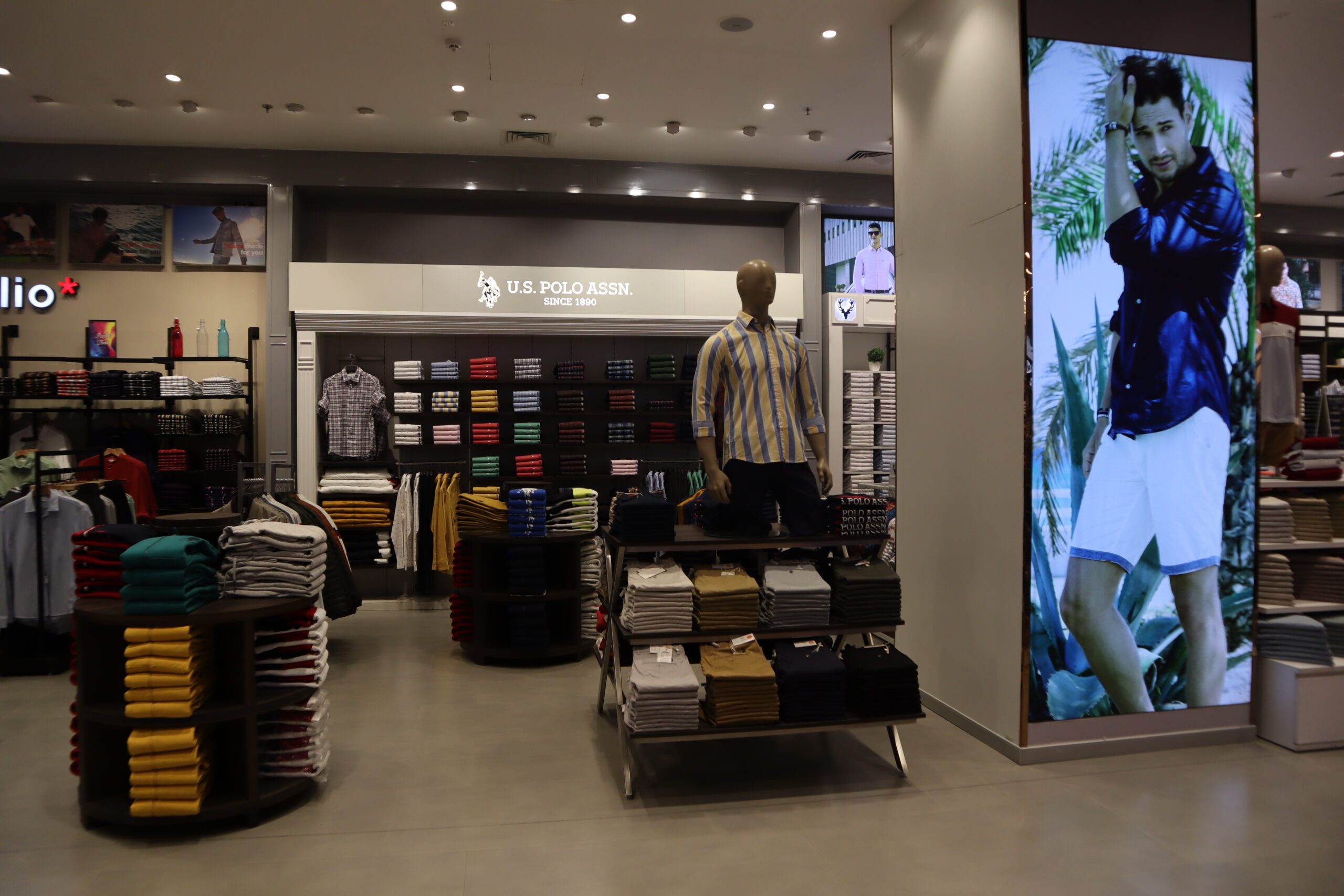
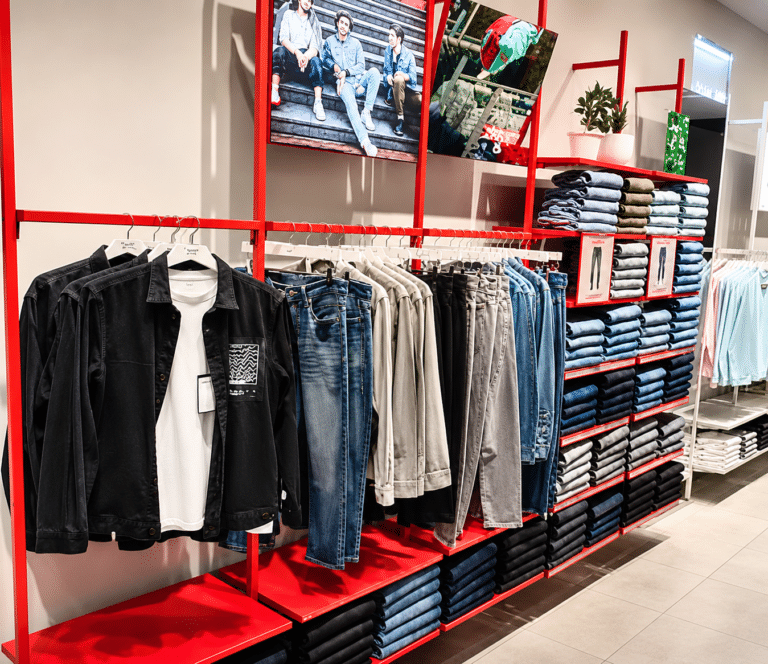
Walk into ten apparel stores and you will see the same handful of fixtures arranged ten ways: wall bays, rounders, four-way racks, gondolas, fold tables, mannequins and a row of fitting rooms. What separates a store that feels easy to shop from one that feels crowded is rarely the catalogue. It is how many of each, at what size, in what order, and whether the same decisions survive the move from store one to store forty.
This guide covers the fixture roles in a fashion store, typical sizes and ratios published by suppliers, layout and fitting-room points, and how to brief a manufacturer for a chain.
The fixture roles in an apparel store
Think in roles, not products. A planning guide for apparel chains suggests defining wall systems, garment presentation, fitting-room adjacency and checkout as separate roles in the customer journey.
| Fixture | Role | Notes |
|---|---|---|
| Wall system or bay | Perimeter capacity, folded and hung, brand story | Common bay widths of 900 to 1,200 mm and heights of 2,100 to 2,400 mm |
| Rounder | Browsing from all sides, high hanging capacity | Allows browsing from all sides and keeps garments from wrinkling |
| Four-way rack | Mid-floor feature for coordinated looks | Arm length of about 350 to 400 mm is typical |
| Gondola | Mixed hanging, shelves and accessories | Versatile, but needs careful layout |
| Fold table | Folded stock and featured items | Nesting tables allow quick changeovers |
| Mannequins and forms | Show the look at the entrance and on bays | An 800 to 1,200 sq ft boutique may use 4 to 8 full-body mannequins and 3 to 6 torso forms |
| Fitting rooms | Try-on, returns and staff sightlines | Connect try-on with product support, returns and staff visibility |
| Cash wrap | Billing, packing and impulse items | Keep sightlines to fitting rooms and the door |
These sizes come from overseas suppliers. Check them against your garment lengths, wall conditions and fixture standards.
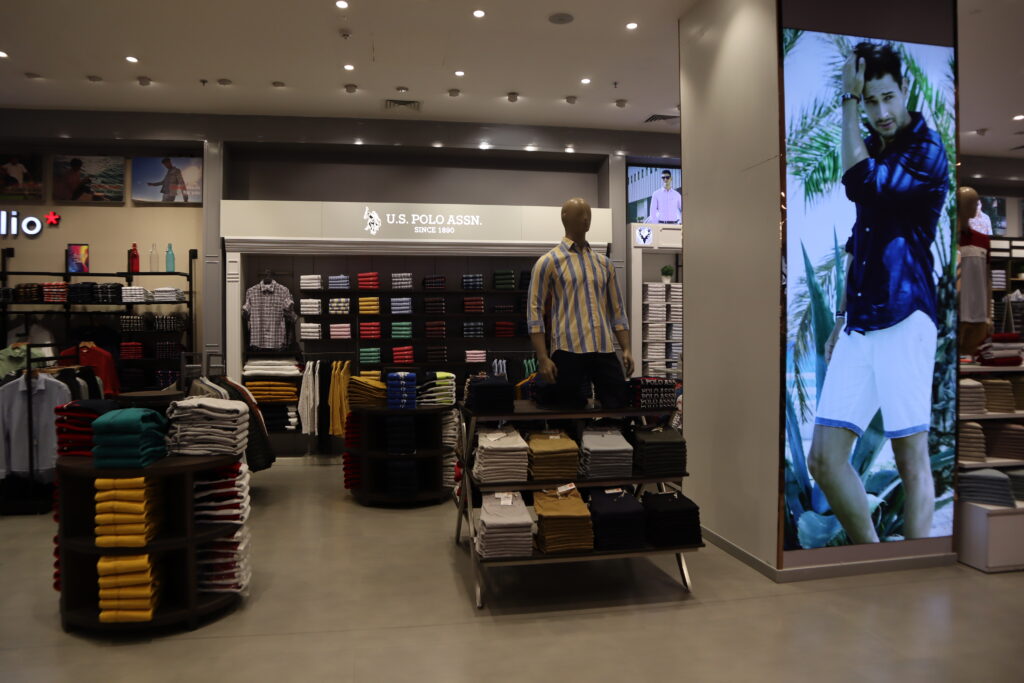
Ratios that shape the fixture list
- Hanging versus folded: one supplier suggests roughly 60 to 70 percent hanging and 30 to 40 percent folded. Kurtas, sarees, denim and innerwear need different ratios.
- Wall versus floor: a small-store guide recommends 60 to 70 percent of display capacity on wall fixtures to keep the central floor open.
- Shelf load: steel shelves typically hold 25 to 40 kg per shelf when anchored. Ask for a load chart for your design.
- Racks are called the workhorse of fashion retail in India, so check hanging height against your longest garment.
Layout points that matter more than they look
- Decompression zone: the first 5 to 8 feet inside the door, which customers use to adjust before they shop. Keep it open or use it for one strong look.
- Sightlines: tall units in a low room block views of corners, which matters for staff and security.
- End caps: the highest-visibility shelf in the store, best saved for promotions and high-margin items.
- Fitting rooms near stock, with a clear line of sight from the cash wrap, and warm, colour-accurate light.
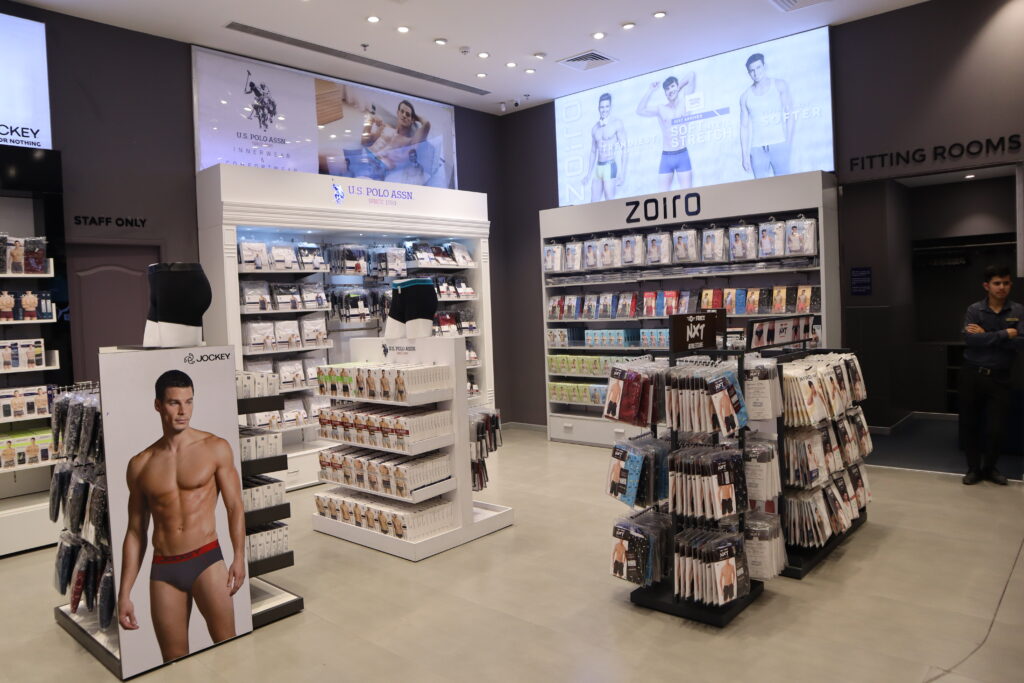
Make fixtures a system, not a shopping list
For a chain, consistency depends on identifying each fixture by SKU, dimensions, materials, finish, assembly method and intended use. Draw one baseline store with two or three size variants, build fixtures from standard modules and keep a finish library. Our retail store rollout plan shows how the pilot, survey and handover fit around that.
Materials and finish
Apparel fixtures take daily abrasion from hangers, bags and cleaning. The usual build is a plywood or dense fibre core with edge-banded laminate, powder-coated or plated metal rails, and brackets rated for the load. Specify by thickness and grade, not by the word ‘wood’. Direct UV printing can carry brand graphics and wood-effect finishes onto panels without pasted film.
A brief for apparel store fixtures
- Store formats, sizes and available wall length.
- Category mix and hanging-to-folded ratio per category.
- Longest garment and hanging heights.
- Fixture list with dimensions, load and finish.
- Mannequin and form count, and who supplies them.
- Fitting room count, size and lighting.
- Brand colour codes, signage and lighting specification.
- Delivery, installation and sign-off by store.
Frequently asked questions
What fixtures does a clothing store need?
Typically wall systems or bays, round and four-way racks, gondolas, fold tables, mannequins and forms, fitting rooms, a cash wrap and signage.
What is the standard size of a garment wall bay?
One supplier gives 900 to 1,200 mm wide and 2,100 to 2,400 mm high. Check against your garments and walls.
How many mannequins does a boutique need?
One supplier suggests 4 to 8 full-body mannequins and 3 to 6 torso forms for an 800 to 1,200 sq ft boutique.
What is a rounder?
A circular hanging rack that lets customers browse from all sides and holds many garments.
How do apparel chains keep fixtures consistent?
By treating fixtures as a system: a baseline plan, standard modules, a finish library and one source of manufacture.
Beyond Retail’s company profile lists more than 1,500 retail showrooms delivered across India, including apparel and lifestyle stores for brands such as Libas, Zouk, Aldo, Salt Attire, Jaipur Kurti, Flying Machine and Aretto. Fixtures, printing and signage are made in-house in Delhi NCR. See custom retail fixtures and turnkey showroom and fixture execution. Share your store formats and we will return a fixture schedule you can compare.