Retail Lighting Engineering Guide: Lux Levels, CCT & Fixture Integration That Drive Sales
Lighting is usually decided late, after the fixtures are drawn and the finishes chosen. By then the options are narrow. A shelf that cannot hold a strip, a header with no space for a driver, or a ceiling plan that fights the display: all of these come from treating light as a service to be added rather than as part of the design.
This guide explains the numbers that matter, why published recommendations differ, how to set them by zone, and how lighting should be built into fixtures so that it performs and can be serviced. One caution first: no source can honestly promise a sales figure from lighting alone. What good lighting does is make products look as they should, guide attention and keep customers comfortable. The rest depends on the store.
The vocabulary, in plain terms
| Term | Meaning | Why it matters in a store |
|---|---|---|
| Lux | Light falling on a surface, in lumens per square metre | Sets how bright an area or a product face is |
| Horizontal and vertical lux | Light on the floor or counter versus light on a shelf or wall face | Customers look at vertical surfaces, so the product face matters more than the floor |
| CCT (colour temperature, K) | How warm or cool the white is | Changes the mood and how materials look |
| CRI (Ra) | How faithfully colours appear | Low CRI makes fabrics, skin and food look wrong |
| R9 | Rendering of deep red | Skin tones, meat and warm colours depend on it |
| Beam angle | Spread of a spotlight | Narrow for hero items, wide for general display |
| UGR | Glare rating of ambient fittings | Controls discomfort from bright fittings |
What Indian standards say, and why vendor numbers differ
The Indian reference for interior illuminance is IS 3646 (Part 1), which the National Building Code’s Part 8 on building services also draws on. In a copy of the standard, the recommended scale runs 200, 300, 500, 750, 1,000 lux and so on, and entries for small shops with counters and small self-service shops show 300 to 500 to 750 lux, while dressing rooms show 200 to 300 to 500 lux. The standard notes that the service illuminance applies to the working plane, and that localised lighting may be added. Check the current edition before quoting any number to a vendor.
Vendor guides give different figures: 300 to 500 lux general with up to 1,000 lux on display, 500 to 1,000 lux on a general floor in one US guide, and 750 lux for grocery and pharmacy in another. They differ because they measure different things: horizontal or vertical, initial or maintained, ambient or accent. A UK guide notes that maintained levels are the minimum, so installed lux is higher at the start to allow for output falling over time. So never specify ‘500 lux’ alone. State the plane, the zone and whether it is maintained.
Build four layers
- Ambient: even general light for navigation and comfort.
- Accent: focused light on hero products, walls and fixtures.
- Task: counters, trial and fitting areas.
- Decorative: brand features and signs.
The accent layer only reads as accent if it is clearly brighter than its surroundings. Guides recommend an accent-to-ambient ratio of 3:1 or higher on key products, and another gives 3 to 5 times the ambient level. Write the ratio into the brief.
A starting zone table
These are typical design ranges drawn from lighting vendors and the IS 3646 entries above. They are starting points for a lighting designer, not a substitute for one.
| Zone | Typical lux | CCT | CRI | Notes |
|---|---|---|---|---|
| General sales floor | 300 to 500 | 3000 to 4000K by category | 80 minimum, 90 for colour-critical | Avoid glare and dark corners |
| Display and feature bays | 750 to 1,500 on the product face | As ambient, same family | 90 or more | 3:1 to 5:1 over ambient |
| Window display | 1,000 to 2,000 | 3000K common | 95 for premium | Must beat daytime reflections |
| Fitting rooms | 300 to 500 | 2700 to 3000K | 90 or more | Keep warm even if the floor is cooler |
| Checkout and counters | About 500 | 3500 to 4000K | 80 or more | Task visibility for billing |
| Grocery and pharmacy shelves | 500 to 750 | 3500 to 4000K | 80 or more, 90 for produce | Label legibility |
Sources for the table: Compare2Best zone guide, Commercial-Lighting.net and BREE specification guide. They are lighting manufacturers and vendors, so confirm with an independent designer.
Colour temperature by category
Colour temperature works as a brand tool as much as a technical one. A guide summarises it as 2700 to 3000K for warm, intimate and luxury, and 4000K for clean, modern and trustworthy. Typical ranges: luxury and fashion 2700 to 3000K, high-street fashion about 3000 to 3500K, cosmetics and jewellery 3000 to 4000K, and electronics, pharmacy and grocery around 4000K. Keep one CCT family across the store, because mixed temperatures look like mistakes, and keep fitting rooms warm.
CRI, and why R9 matters
Ask for both CRI and R9. One specification guide advises CRI 90 or more wherever colour drives the purchase, CRI 95 or more for luxury and jewellery, and R9 above 50 for general retail and above 80 for fashion and cosmetics. A fixture can have a decent CRI and a poor R9, which is when reds and skin tones look wrong. High CRI at the wrong CCT also fails: the same guide warns against flat-looking mannequins under cool light.
Integrating light into fixtures
This is where fixtures and lighting meet, and where most avoidable problems begin. The points below are engineering practice rather than quoted standards.
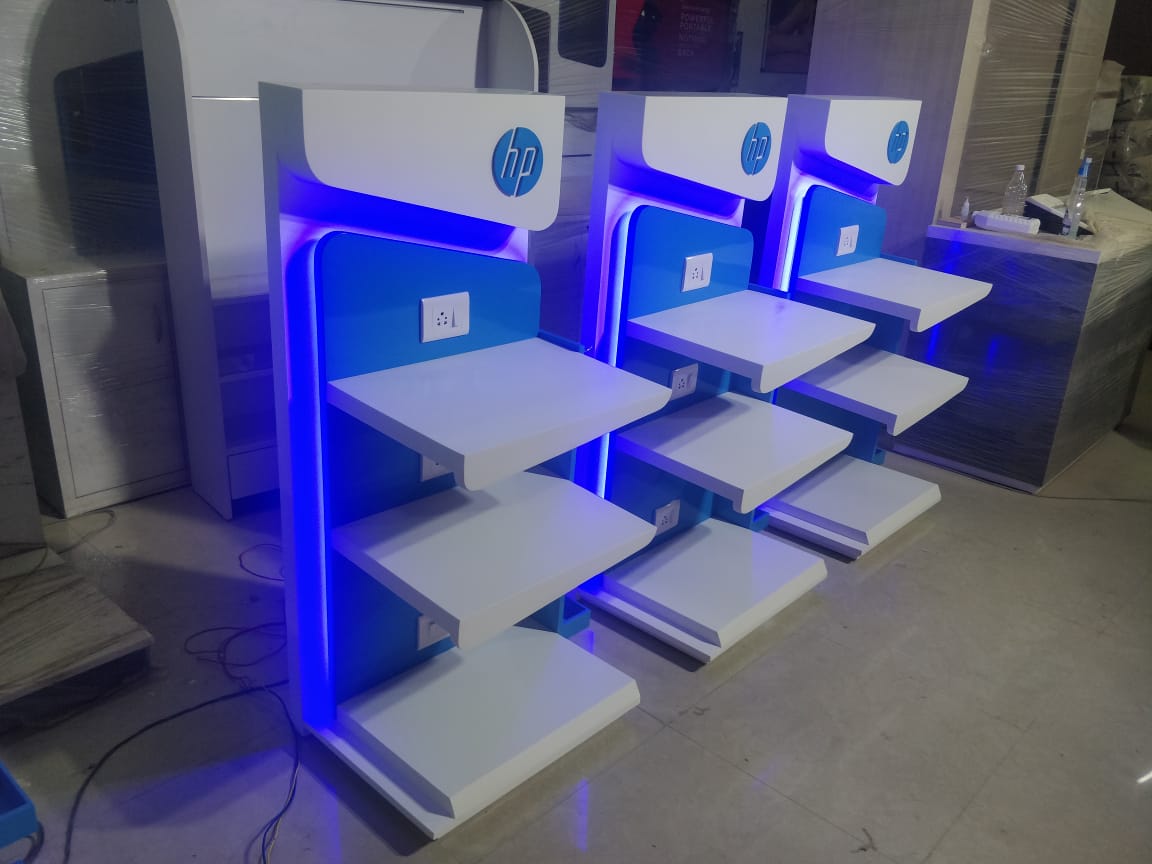
- Decide the lighting type per fixture at the drawing stage: shelf-edge strips, in-case lighting, backlit panels, edge-lit graphics or lit headers.
- Keep CCT and CRI consistent between fixture-integrated light and ceiling light. Specify the same CCT tolerance across batches.
- Hide the source and show the light. Diffusers, recessed channels and shields prevent glare and visible dots.
- Plan heat and ventilation. Drivers and tightly packed strips need airflow and safe materials around them.
- Make the driver accessible. A failed driver should be replaceable without dismantling the fixture.
- Plan cable routes and power points before finishes are fixed, so wires are not left visible.
- Use dimming or scenes where the store’s lighting changes through the day or by campaign.
- Aim light at the product face, not at the floor. Check the vertical lux on the shelf, not only the ceiling plan.
- Coordinate with fire and electrical rules in the mall’s fit-out criteria.
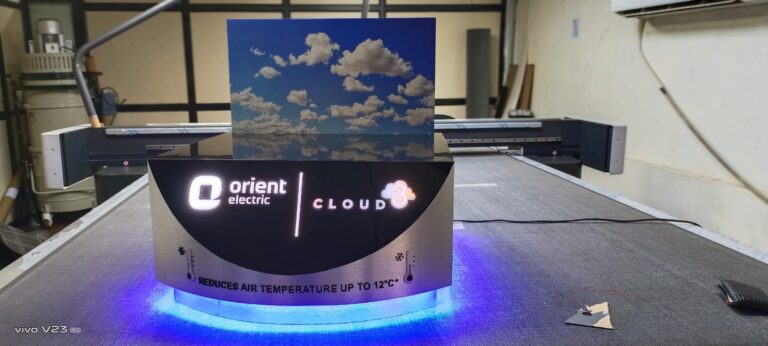
Illuminated formats such as lit posters, edge-lit panels and backlit headers are covered in our guides to illuminated POSM and displays and LED, neon and edge-lit signage. For how lighting supports merchandising zones, see visual merchandising basics.
Commissioning: measure what was installed
- Build a mock-up bay and review it at the store’s own lighting level before rollout.
- Measure lux at the agreed planes with a calibrated meter at handover, and record the readings.
- Check colour appearance on real merchandise, not on a white card.
- Aim and adjust accent fittings on site, then lock them.
- Record the lamp, driver and strip part numbers so replacements match.
Common mistakes
- Quoting a lux number without a plane or zone.
- Choosing CRI without R9, or CCT without considering the brand.
- Mixing temperatures between fixtures and ceiling.
- Lighting the floor and leaving product faces dark.
- Burying drivers where they cannot be reached.
- Skipping the mock-up for a multi-store rollout.
Frequently asked questions
What lux level should a retail store have in India?
IS 3646 entries for small shops show 300 to 500 to 750 lux. Vendor guides commonly use 300 to 500 lux for general retail and up to 1,000 lux or more on feature displays. State the plane and zone, and have a designer confirm.
What colour temperature is best for a clothing store?
Most guides suggest about 3000 to 3500K for fashion, with fitting rooms at 2700 to 3000K, and CRI 90 or more.
What CRI do I need for retail lighting?
CRI 80 is a minimum for general retail. Use 90 or more where colour matters and 95 or more for jewellery and luxury, and check R9 as well.
What is a good accent-to-ambient ratio?
Guides suggest at least 3:1, and up to about 5:1, on key products.
How should lighting be built into display fixtures?
Plan source, driver access, heat, cable routes and CCT consistency at the drawing stage, and make drivers replaceable without dismantling the fixture.
Beyond Retail designs and fabricates illuminated fixtures, including lit posters, edge-lit and backlit panels, illuminated counters and LED video, in-house at its Delhi NCR facility, with 3D design to review a fixture before production. Bring your lighting specification early so the fixture drawings can make space for it. See our custom retail fixtures, then share your layout and lighting plan.