Custom POSM Display Stands in India: What Drives Cost, MOQ and Lead Time
Ask three display makers for the price of “a floor display unit” and you will get three numbers that cannot be compared, because each vendor quietly assumed a different size, board, print and quantity. The question is reasonable. The way it is usually asked is what makes it unanswerable. This guide explains what actually moves the price of a custom POSM display in India, what minimum order quantities look like, how long production takes, and how to write a request that returns quotes you can compare.
Why there is no single price
Even a competitor’s own blog shows the problem. One Delhi POSM maker’s guide gives a range of ₹20,000 to ₹50,000 for custom designs without saying what quantity, size or material that covers. A range with no specification is a range of nothing. A display is not a product with a price. It is a design, a structure, a print job and a delivery, each priced separately. If you are still deciding which format to buy, start with our guide to choosing an in-store display for a product launch.
The five things that decide the price
| Driver | What changes the cost | What to decide early |
|---|---|---|
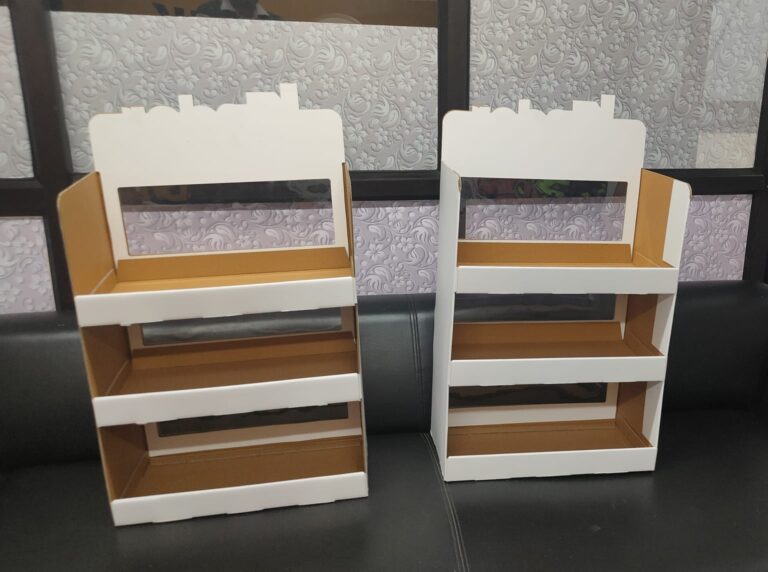
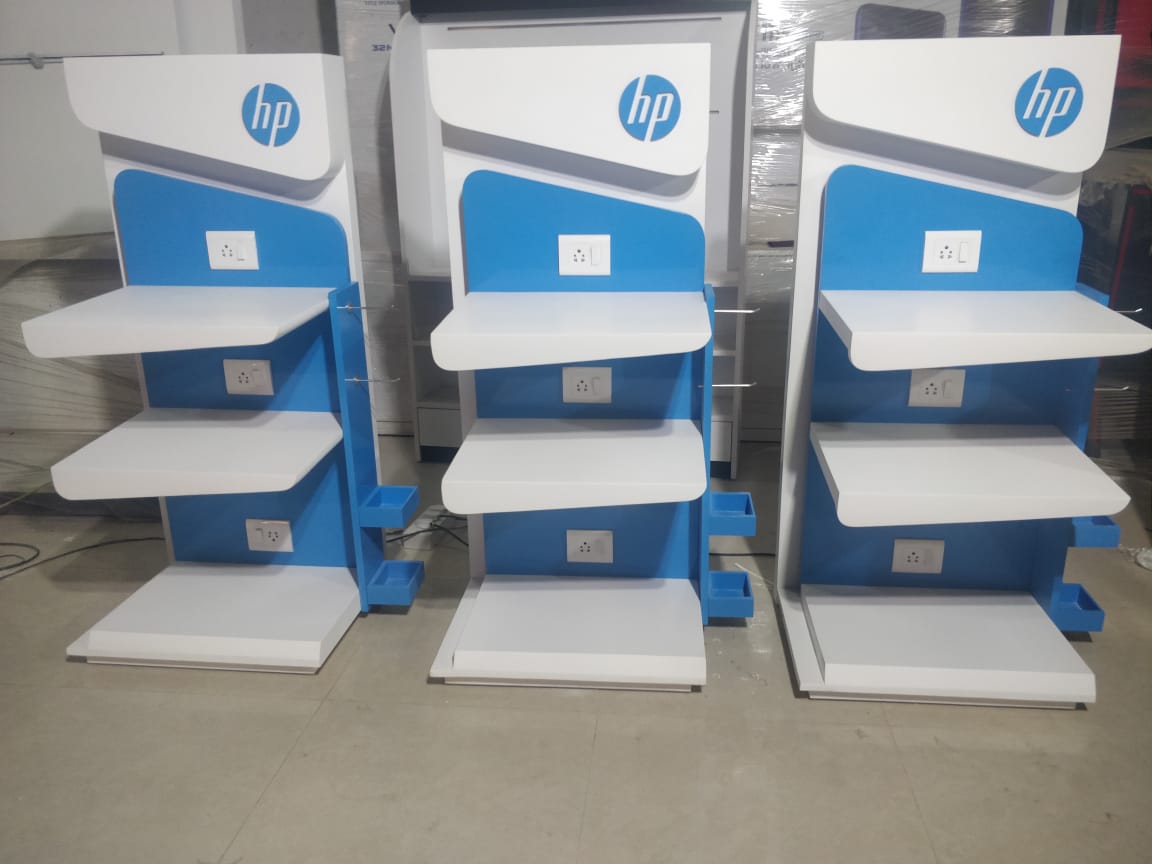
| Structure and material | Corrugated board, PP sheet, acrylic, metal or wood; number of shelves; load per shelf; whether it folds flat | How long it must last in store, and what weight it carries |
| Size | Height, depth and shelf count change material use and freight volume | Real shelf or counter space the retailer will give you |
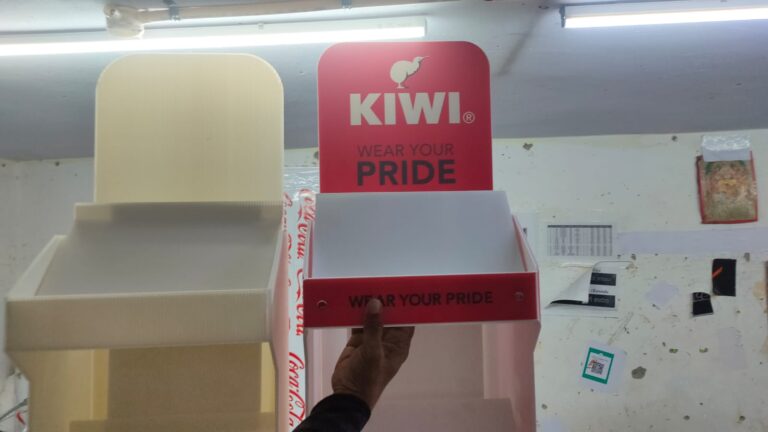
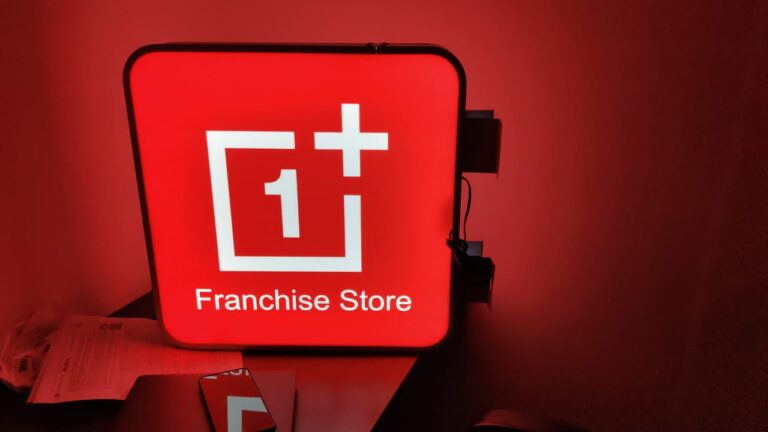
| Print and finish | Number of faces printed, print method, lamination, lighting, backlit panels | Whether graphics change per campaign |
| Quantity and tooling | Cutting dies, jigs and set-up are spread over the run; more units lower the unit price | Quantity per design, and how many designs |
| Packaging, freight and installation | Flat-pack versus assembled, number of delivery cities, on-site set-up | Delivery locations and who assembles |
Print is the item people forget. When printing is done in the same facility as the structure, a graphic change is a file change, not a new job. Beyond Retail’s digital printing runs in-house for exactly that reason.
What Indian listings show, and how not to read them
Public price points exist, mostly on supplier listing pages. They are useful as orientation for standard, catalogue-style items. They are not quotes for custom work, and several pages carry a “price on request” tag beside the listed number.
| Item as listed | Listed price | Listed MOQ | Source |
|---|---|---|---|
| Foldable floor display, PP sheet, three shelves up to 6 ft, UV printed | ₹1,250 per piece | 5 pieces | Coimbatore supplier listing |
| Counter top display stand | ₹400 to ₹500 per piece | 10 to 100 pieces | New Delhi supplier listing |
| Foldable display floor stand | ₹3,500 per piece | 100 pieces | New Delhi supplier listing |
| Fabric standee | ₹700 per piece | 10 pieces | New Delhi supplier listing |
| Modular display stands | ₹28,000 per square metre | 1 square metre | New Delhi supplier listing |
The spread from ₹400 to ₹28,000 per unit or area is the point. Format, material and size explain it, not vendor greed. A listed price is only meaningful next to its specification, and none of these lines includes freight to your cities or installation.
MOQ: why it exists and how to work with it
Minimum order quantity exists because set-up costs, such as cutting dies, jigs and print preparation, are fixed. A small run carries all of them. Indian listings above show MOQs from 5 to 100 for standard formats. A Gujarat manufacturer’s page states a minimum of around 100 units for counter-top and floor-standing units and 500 for shelf talkers and pouch hangers. One overseas acrylic factory notes that MOQ is counted per design, and changing dimensions, material or artwork can count as a separate design. That rule of thumb is worth borrowing.
- Pool quantity by keeping the structure identical and changing only the graphic. Many vendors treat a graphic change as a smaller cost than a new structure.
- Test with a pilot batch in a few stores before committing to the full run, and say upfront that a larger order follows.
- Ask for prices at three quantity levels, for example 100, 500 and 1,000, so you can see where the unit price flattens.
Lead time: what the sources say and what stretches it
Lead time depends on whether the design already exists. One Indian vendor states 10 to 18 working days for most display formats, and a Coimbatore listing for a simple foldable stand shows delivery in 5 to 7 days. An overseas factory’s page describes a sample in 3 to 5 days and production in 15 to 20 days at its minimum order. These are vendor statements for specific products, not guarantees.
What stretches lead time in practice is rarely the machine time. It is a new structural design that needs a prototype, several rounds of artwork approval, illumination or electronics that need testing, festive-season peaks when printers and carpenters are busy, and delivery to many cities. Plan backwards from the in-store date and book the approval meeting before the production slot.
How to ask for a quote that can be compared
| Item to send | Why it matters |
|---|---|
| Quantity per design and number of designs | Sets MOQ treatment and unit price |
| Size, shelf count and load per shelf | Determines material and strength |
| Material preference, or the in-store life you need | Lets the vendor propose board, PP, acrylic or metal |
| Artwork files, number of printed faces, finish | Print is a separate cost line |
| Packaging: flat-pack or assembled | Changes freight volume and handling |
| Delivery cities and who installs | Freight and installation can outweigh the unit price |
| Required in-store date and sample or prototype needs | Drives lead time and approval planning |
| Whether graphics will change during the run | Affects whether a reusable frame is worth it |
Levers that reduce cost without weakening the display
- Flat-pack or foldable structures cut freight and assembly cost. Several vendors claim large savings, but the benefit depends on your freight lanes.
- A reusable frame with changeable graphics turns later campaigns into print jobs. See our guide to in-store standees for the formats where this works.
- Standard sizes across designs allow the same dies and packaging to be reused.
- Ordering before the festive peak avoids both queue delays and rush charges.
- Ask whether the design really needs lighting or motion. Our guide to POS displays that drive sales covers when it earns its cost.
Frequently asked questions
How much does a custom FSDU cost in India?
There is no single price because it depends on size, material, shelf count, print and quantity. Supplier listings show catalogue-style floor units from about ₹1,250 per piece at a minimum of 5 pieces to ₹3,500 for a foldable floor stand at a minimum of 100. Custom builds are quoted against a specification.
What is the MOQ for custom display stands?
For standard formats Indian listings show from 5 to 100 pieces, and some manufacturers quote 100 or more for floor and counter units. MOQ is usually counted per design, so changing structure or artwork can create a separate design.
How long does it take to make a custom POSM display?
One Indian vendor quotes 10 to 18 working days for most formats. Time grows with new structural design, prototypes, approvals, illumination and the number of delivery cities.
Can I order fewer units for a pilot?
Often yes, at a higher unit price. Tell the vendor a larger order will follow and ask for prices at several quantity levels.
Does Beyond Retail publish a price list?
No, because cost depends on the specification. Send the brief in the table above and you will receive a quote that can be compared.
Beyond Retail designs and fabricates POSM in-house, from floor and counter units to illuminated and changeable-graphic formats. Its point-of-sale materials page shows the range, and 3D design lets you see a unit before production. Send your brief with quantities, sizes, cities and the in-store date, and you will get a quote in a form you can compare.
For how materials, design and the manufacturing route change the price, see our guide to custom retail display stand cost in India.