UV Flatbed Printing on Rigid Substrates (ACP, Acrylic, Glass, Wood): Direct-to-Substrate vs Vinyl Pasting
A printed sheet of vinyl pasted onto a wooden panel is a perfectly normal way to make a retail graphic. It is also the way many graphics come to peel at the corners, trap air under the surface or fade unevenly after one season. Direct UV printing avoids the pasting step by printing ink straight onto the rigid panel. It is not always the right answer, and it has failure modes of its own, mostly to do with surface preparation.
This guide compares the two routes on adhesion, durability, limits and cost, explains where each suits retail work, and lists the tests to ask for before approving a batch.
What each route actually is
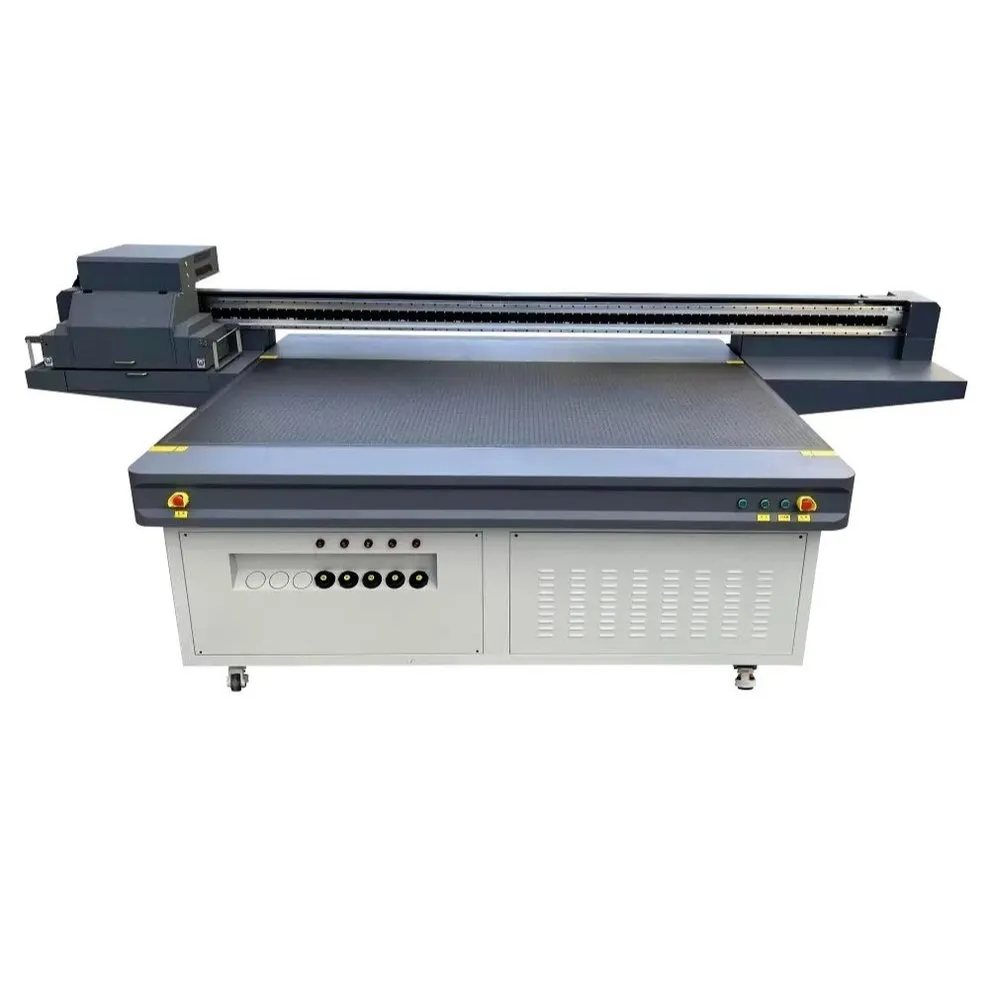
Direct UV printing is a process in which ink is applied straight onto a rigid substrate and instantly cured by UV light. Vinyl printing and pasting is a two-step process: the artwork is printed on vinyl film and then pasted by hand onto the face of the panel. One print shop puts the difference simply: with flatbed printing the ink bonds with the surface of the substrate, rather than sitting on top of it.
Where direct printing wins
- No pasting, so no air bubbles or lifting edges. A Toronto supplier notes that mounting vinyl over rigid boards often introduces peeling edges and air bubbles, which direct printing avoids.
- Scratch resistance. Cured UV ink is generally scratch-resistant, and for most indoor uses has an indefinite service life.
- Speed and labour. There is no separate lamination or mounting stage, which matters across a rollout.
- A thin, flat finish with no laminate sheen, and clean cut edges when the panel is trimmed after printing.
- Special effects. White ink under colour, and printing on the back of clear acrylic, which gives the image a depth that front-surface printing cannot reproduce.
- Cold curing. UV-LED curing is a cold process, so acrylic prints flat without warping from heat.
Where vinyl still wins
Vinyl is flexible, reusable and perfect for backlighting or curved surfaces, as one comparison puts it. It also suits surfaces and sizes that a flatbed cannot take. Direct prints cost more, can only be used on smooth, flat surfaces, and sometimes show banding. Practical limits:
- Curved, textured or very large surfaces: vinyl or wraps.
- Graphics that will be replaced often on a permanent panel: repositionable vinyl.
- Panels larger than the bed: tiled prints show joins. Typical beds take sheets up to about 4 by 8 feet, and some machines take less.
- Heat-bent or formed parts: the ink must be flexible enough to stretch, or the part must be printed after forming.
The side-by-side
| Factor | Direct UV print | Printed vinyl pasted on |
|---|---|---|
| Adhesion failure | Peeling from poor surface preparation, not from the film | Edge lift, bubbling, film shrinkage |
| Scratch and wear | Embedded in the cured layer, generally strong | Surface can be scratched, laminate improves it |
| Outdoor use | Add a UV laminate or clear coat for exterior use | Depends on film, adhesive, ink and lamination |
| Curved or textured surfaces | Poor | Good |
| Backlit use | Good on translucent substrates | Good with backlit film |
| Labour | Print and trim | Print, laminate, mount, trim |
| Cost per piece | Often higher machine cost, lower labour | Lower machine cost, more labour |
The real cause of most direct-print failures: preparation
Direct UV printing is not foolproof. A supplier states that a frosted or dirty substrate is the most common cause of peeling within the first 90 days, traced to mould-release agents, polishing compounds, static charge or fingerprint oil, and recommends an alcohol wipe before printing. On glass, adhesion is usually the main challenge, and a flatbed typically needs an adhesion promoter on glass or powder-coated metal. In short, the quality of a direct print depends on the quality of the shop’s process as much as on the machine.
Substrate by substrate
| Substrate | Notes for direct printing | Typical retail use |
|---|---|---|
| ACP | Flat, rigid and stable. Good adhesion on most grades. Add a clear coat outdoors | Fascia panels, wall branding, display backs |
| Acrylic | Remove the protective film, clean well. White ink gives colour fidelity on clear stock | Counters, edge-lit panels, shelf strips |
| Glass | Adhesion is the main challenge. Use a promoter and test | Direct glass branding, entrance graphics |
| Wood and MDF | Prints well. Seal porous surfaces. A textured wood face can be printed with a matching look | Apparel store walls and fixtures |
| Sunboard (PVC foam) | Prints easily, light | Standees, shelf POSM |
| Translucent sheet | Prints well for backlit use | Backlit displays and light boxes |
Tests to ask for before approval
Adhesion is checked with simple tests. A UV print guide lists a fingernail scratch test, a tape-pull test and a wet-wipe test, with a short trial under real use. Passing one does not guarantee resistance to every kind of wear. Ask the vendor to run these on the production substrate, not on a spare sample, and to keep a retained sample from each batch.
A brief for direct-printed panels
- Substrate, thickness and finish for each part.
- Maximum panel size and whether tiling is acceptable.
- Indoor or outdoor, and the protective coating needed.
- Colour references, and whether white ink is needed under colour.
- Post-print operations: cutting, bending, forming or drilling.
- Adhesion and colour tests, and batch samples.
Frequently asked questions
Is UV flatbed printing better than vinyl pasting?
On flat rigid panels, usually, because there is no pasted layer to lift or bubble. Vinyl is better for curved surfaces, very large panels and graphics that are changed often.
Can you print directly on acrylic, ACP and glass?
Yes. All three can be printed on a UV flatbed, with surface preparation. Glass often needs an adhesion promoter.
How large can a UV flatbed print?
Common beds take sheets up to about 4 by 8 feet. Larger panels are tiled.
Does direct UV printing last outdoors?
It can, with a UV laminate or clear coat on exterior work. Life depends on substrate and exposure.
Why do UV prints peel?
Most often because the surface was not properly cleaned or prepared, not because of the ink.
Beyond Retail prints directly on sunboard, acrylic, ABS, ACP and poly sheet with UV flatbed printing at its Delhi NCR facility, alongside roll-to-roll and other print technologies listed on its infrastructure page. See its digital printing service. Send artwork and substrates with sizes and use, and we will say which route suits each part and print a sample for approval.